Louisville and Jefferson County KY VA-approved condo guide for Kentucky veterans and real estate agents.
Louisville Kentucky VA Approved Condos for Jefferson County KY
If you are a Kentucky veteran, active-duty service member, or eligible surviving spouse looking at a condominium in Louisville, the first thing to confirm is simple: is the condo project acceptable for VA mortgage financing?
A VA loan can be one of the strongest mortgage programs available because it may allow qualified buyers to purchase with no down payment, no monthly private mortgage insurance, and competitive loan terms. However, condos add one extra layer of due diligence. The condominium project itself must be acceptable for VA financing before the loan can move forward smoothly.
Quick answer: Louisville veterans can use a VA loan to buy a condo in Jefferson County KY, but the condo project should be checked against VA approval records before contract, appraisal, and underwriting deadlines become an issue.
Why VA Condo Approval Matters in Kentucky
Buying a single-family home with a VA loan is usually more straightforward from a property-approval standpoint. Condos are different because the financial health, insurance coverage, ownership structure, legal documents, and management of the condominium project can affect VA eligibility.
That is why Kentucky homebuyers and real estate agents should verify the condo project early. Waiting until after the offer is accepted can create avoidable delays, especially if the condo is not already listed as approved.
VA Loan Benefits for Louisville Condo Buyers
No down payment may be required when the purchase price does not exceed the appraised value and the borrower qualifies.
No monthly private mortgage insurance is required on VA loans.
Seller-paid closing costs and concessions may help reduce cash needed to close.
VA loans may be more forgiving than conventional financing for qualified veterans, depending on credit, income, residual income, and overall risk profile.
VA eligibility can be used more than once, subject to entitlement and VA guidelines.
Before writing an offer on a condo, verify the project using the VA condo report or have your lender check it for you. The official VA condo report can be accessed here: VA Condo Report Search.
The list below is based on the Jefferson County KY VA-approved condo results provided for Louisville-area VA mortgage loan research. Condo approval status should always be re-verified before contract, appraisal, or final loan approval because records can change.
Condo Name
VA Condo ID
Record Type
ANDERSON PARK CONDOMINIUM
000004
Condo
ARBOR CREEK CONDOMINIUMS
H00212
Condo
ARBOR CREEK CONDOS II
H00306
Condo
AUTUMN TRACE CONDOMINIUM
H00282
Condo
BAXTER PLACE CONDOMINIUMS
H00309
Condo
BRADFORD COMMONS CONDO
H00319
Condo
BRADFORD COMMONS CONDOS
000001
Condo
BRITTANY POINTE CONDOMINI
005775
Condo
BROWNSBORO VILLAGE COURT
H00398
Condo
CARRINGTON GREENE COURTYARD
000012
Condo
CHAMBERLAIN SQUARE CONDO
H00614
Condo
COPPERSHIRE CONDOMINIUM
005613
Condo
COTTONWOOD CONDOMINIUM
H00053
Condo
CREEKWOOD TERRACE
H00095
Condo
CRESCENT CONDOS
VAC028
Condo
CROSSINGS @ COOPER CHAPEL
H00155
Condo
DARNELL MANOR CONDOMINIUM
H00368
Condo
DONARD PARK CONDOMINIUMS
000003
Condo
DORSEY HILLS CONDOMINIUM
H00199
Condo
DORSEY VILLAGE
005601
Condo
EAST HAMPTON
H00693
Condo
EVERETT PLACE CONDOMINIUM
005724
Condo
EVERGREEN POINT CONDO
H00637
Condo
FOREST PARK CONDOS
H00096
Condo
FOX HOLLOW CONDOMINIUM
H00634
Condo
GARDENS AT BAY RUN CONDO
H00639
Condo
GLENVIEW EAST
005674
Condo
GRAYSTONE MANOR
H00070
Condo
HARRODS LANDING CONDOMINI
H00464
Condo
HAWTHORNE POINTE CONDOS
H00134
Condo
HIGHWOOD
H00211
Condo
HIKES PARK TOWNHOMES
H00066
Condo
HITE AVENUE GARDENS
005801
Condo
INDIAN RIDGE CONDOMINIUMS
H00358
Condo
LAKEVIEW
VAC010
Condo
MAGNOLIA PLACE
005597
Condo
MANNER POINTE
000013
Condo
MERCANTILE GALLERY LOFTS
000015
Condo
MOSS CREEK CONDOMINIUM
H00294
Condo
PARK CENTRAL
VAC101
Condo
PARK LANE CONDOMINIUM
H00179
Condo
PINNACLE GARDENS
H00111
Condo
REGENCY THREE CONDOMINIUM
005892
Condo
RIVER POINTE PATIO HOMES CONDO
000017
Condo
SALEM SQUARE CONDOMINIUM
H00067
Condo
SHELBY CROSSING CONDOMINI
H00344
Condo
SHELBY CROSSING CONDOMINIUMS
000006
Condo
SOUTH HALL CONDOMINIUMS
005723
Condo
SPRING DRIVE CONDO
005656
Condo
SPRINGS OF GLENMARY
H00217
Condo
SPRINGS OF GLENMARY VLLGE
005612
Condo
ST ANTHONY'S LANDING
H00194
Condo
STONEHENGE CONDO
005602
Condo
SWAN POINTE CONDOMINIUMS
H00586
Condo
THE CLIFF VIEW TERRACE CO
H00587
Condo
THE COTTAGES @ MEADOWVIEW
H00182
Condo
THE FOUNTAINS CONDOMINIUM
H00171
Condo
THE GARDENS OF GLENMARY
H00272
Condo
THE GARDENS OF MONTICELLO
H00609
Condo
THE PARKVIEW CONDOMINIUMS
H00258
Condo
THE VILLAGE @ WILDWOOD
H00088
Condo
THE VILLAGE @INDIAN FALLS
H00143
Condo
THE VILLAGE OF WHITE OAKS
H00531
Condo
THE VILLAS OF STONY FARM
H00288
Condo
THE WOODS OF CRESCENT HIL
H00031
Condo
THE WOODS OF CRESCENT HIL
H00030
Condo
TIMBERWOOD II
000005
Condo
TREIS CONDOMINIUMS
H00058
Condo
VALHALLA VISTA CONDOMINIUMS
000024
Condo
VALLEY FARMS PATIO HOMES
000021
Condo
VILLAGE AT PRESTON CROSSI
H00504
Condo
VILLAGE AT WILDWOOD
H00125
Condo
WEMBERLY HILL GARDEN HOME
VAC143
Condo
WESTPORT GARDENS
000008
Condo
WESTPORT RIDGE CONDO
H00629
Condo
WINDSOR GATE CONDOMINIUM
H00262
Condo
WISTERIA LANDING CONDO
H00535
Condo
WOODMONT
H00156
Condo
WOODRIDGE LAKE PATIO HMS
H00092
Condo
WOODRIDGE LAKE TOWNHOMES
H00093
Condo
WOODS OF ST. ANDREWS
H00139
Condo
WOODSPOINTE
VAC074
Condo
WORTHINGTON GLEN CONDOS
H00162
Condo
WYNDEMERE
H00213
Condo
WYSTERIA LANDING CONDOMIN
H00351
Condo
YORKWOOD CONDO I
VAC013
Condo
YORKWOOD CONDO II
VAC016
Condo
How to Use This VA Condo List
Find the condo project name in the list.
Confirm the condo ID and project status in the VA condo report.
Ask the listing agent or HOA for current condo documentation if needed.
Have the lender verify borrower eligibility, residual income, credit, assets, and occupancy.
Do not order the VA appraisal until the condo eligibility path is clear.
What If the Louisville Condo Is Not on the VA Approved List?
If a condo project is not showing as VA approved, it does not automatically mean the buyer is dead in the water. It does mean the deal needs to be reviewed carefully before you assume VA financing will work. The lender may need to determine whether the project can be submitted for VA review and whether the timeline still works for the buyer, seller, agents, and closing date.
The practical reality is simple: if the condo is already VA approved, the transaction is usually cleaner. If the condo is not already approved, the file may need more documentation, more time, and more cooperation from the HOA or management company.
Important Questions Before a Veteran Writes an Offer on a Condo
Is the condo project currently VA approved?
Does the condo name match exactly in the VA condo report?
Is the project in Jefferson County, Louisville, or another Kentucky county?
Are there pending lawsuits, insurance issues, budget problems, or high delinquency rates?
Will the HOA or management company provide documents quickly?
Does the buyer qualify for the VA loan based on income, credit, residual income, and debts?
Is the unit intended as the buyer’s primary residence?
Topical Kentucky VA Loan Resources
For more Kentucky mortgage guidance, review these related resources:
Need Help Buying a VA-Approved Condo in Louisville KY?
If you are a Kentucky veteran looking at a condo in Louisville or Jefferson County, get the condo checked before you waste time, money, or appraisal fees. I can review the condo project, your VA eligibility, credit, income, and cash-to-close numbers before you write the offer.
Frequently Asked Questions About VA Approved Condos in Louisville KY
Can I buy a condo in Louisville with a VA loan?
Yes. Eligible veterans, service members, and qualifying surviving spouses may use a VA mortgage loan to buy a condo when the borrower qualifies and the condo project is acceptable for VA financing.
Does a Louisville condo have to be VA approved?
The condo project should be checked through VA resources before relying on VA financing. If the project already appears as approved, that can help reduce the risk of loan delays.
Are FHA-approved condos automatically VA approved?
No. FHA condo approval and VA condo approval are not the same. Always verify the project through VA resources before assuming it works for a VA loan.
What are the biggest VA loan benefits for Kentucky condo buyers?
Major VA loan benefits may include no down payment, no monthly private mortgage insurance, competitive loan terms, and limited closing costs. Borrowers must still meet VA and lender requirements.
Who should verify the VA condo status?
The lender should verify the VA condo status early. Real estate agents should also confirm the project name and HOA contact information as soon as the buyer shows interest in a condo.
Joel Lobb, Mortgage Broker – FHA, VA, USDA, KHC, Fannie Mae. EVO Mortgage. Helping Kentucky Homebuyers Since 2001. NMLS #57916 | Company NMLS #1738461.
Equal Housing Lender. This is not a commitment to lend. All loans are subject to credit approval, VA eligibility, property approval, underwriting, and program requirements. This site is not endorsed by or affiliated with FHA, VA, USDA, KHC, or any government agency.
VA Refinance in Louisville Kentucky: Complete Guide to IRRRL, Cash-Out & Rate-and-Term Options
As a Kentucky mortgage lender with over 20 years of experience, I’ve helped more than 1,300 veterans and active military members refinance their VA home loans to save money, access home equity, and achieve better loan terms. If you’re a Louisville area veteran with an existing VA mortgage, understanding your refinance options could save you thousands of dollars over the life of your loan.
This comprehensive guide covers the three main VA refinance options available to Kentucky veterans: VA Interest Rate Reduction Refinance Loans (IRRRL), cash-out refinancing, and rate-and-term refinancing.
Ready to Explore Your Refinance Options?
Get a free pre-qualification and see your refinance options today. Same-day approvals on most applications.Call or Text: 502-905-3708Email: kentuckyloan@gmail.com
What is a VA Refinance Loan?
A VA refinance loan allows veterans who already have a VA mortgage to refinance their existing home loan into new terms. Unlike traditional cash-out refinancing, VA refinancing leverages your existing VA home loan entitlement, making the process faster and more affordable.
Why refinance your VA mortgage?
Lower monthly payments through reduced interest rates
Access home equity with cash-out refinancing for home improvements, debt consolidation, or other expenses
Shorter loan terms to pay off your mortgage faster
Convert ARM to fixed-rate mortgages for payment stability
Eliminate PMI with no requirement for mortgage insurance
If you’re curious about whether refinancing makes sense for your specific situation, contact me at 502-905-3708 for a free, no-obligation consultation.
Understanding VA Loan Entitlement for Refinancing
Before exploring specific refinance programs, it’s important to understand your VA loan entitlement. Your entitlement is your “eligibility” to use the VA loan benefit.
Key entitlement facts:
The basic entitlement available to each eligible veteran is $36,000
If you’ve already used your entitlement for a previous VA purchase, you can reuse it for a refinance
A Certificate of Eligibility (COE) from the VA proves you’ve used your entitlement before
Lenders can verify entitlement status without requiring a new COE in some cases
For IRRRL refinances specifically: You only need to certify that you previously occupied the home—the occupancy requirements are different from purchase loans.
Uncertain about your entitlement status? I can help you determine your eligibility and available options at no cost. Call or text 502-905-3708 or email kentuckyloan@gmail.com.
VA IRRRL Refinance (Interest Rate Reduction Refinance Loan) – The Streamline Option
The VA Interest Rate Reduction Refinance Loan (IRRRL), also called a VA streamline refinance, is the fastest and simplest way for veterans to lower their interest rate and reduce monthly payments.
How Does a VA IRRRL Streamline Refinance Work?
The IRRRL is designed specifically to refinance an existing VA-to-VA mortgage into better terms. The VA guarantees the new loan just as it did your original mortgage, which means lenders can approve IRRRLs with minimal paperwork.
The streamline advantage:
No appraisal required
No underwriting/credit check required
No Certificate of Eligibility (COE) needed (though you can provide one)
Loan can be approved in as few as 7-10 business days
All closing costs can be rolled into the new loan amount
Minimal documentation needed
IRRRL Eligibility Requirements
To qualify for a VA IRRRL streamline refinance, you must meet these basic criteria:
You already have a VA loan – The IRRRL is only for refinancing an existing VA mortgage
VA-to-VA refinance – You’re refinancing a VA loan into another VA loan (you cannot use IRRRL to refinance into a conventional or FHA loan)
You previously occupied the home – Unlike purchase loans, you don’t need to occupy the property now; you just need to certify you did in the past
Your entitlement must be available – If you’ve used your full entitlement for another property without paying off the original loan, you may have limited options
Subordination requirement: If you have a second mortgage (home equity line of credit, second lien, etc.), the holder must agree to subordinate (place) that loan below your new VA mortgage. If they won’t, the IRRRL may not be possible.
IRRRL Closing Costs & Funding Fee
One of the biggest advantages of IRRRL refinancing is the ability to do it with “no money out of pocket” by rolling all costs into the new loan amount.
Typical IRRRL costs include:
VA funding fee (reduced for IRRRL – typically 0.55% of the loan amount)
Title insurance and title search
Recording fees and transfer taxes (varies by county)
Appraisal fee (if lender requires one, though not mandatory)
Loan origination fee
VA Funding Fee Exemptions
You do NOT pay a funding fee if you are:
A veteran receiving VA compensation for a service-connected disability
A veteran entitled to receive compensation for a service-connected disability (even if receiving military retirement pay)
A surviving spouse of a veteran who died in service or from a service-connected disability
Real-world example: On a $200,000 IRRRL refinance, a typical VA funding fee of 0.55% equals $1,100. If closing costs total $3,500, the entire amount can be rolled into your new loan, meaning zero cash at closing.
IRRRL Rate Reduction Rule – Do You Have Enough Savings?
The VA doesn’t require a minimum rate reduction for an IRRRL, but lenders do. Most lenders require a “net tangible benefit,” which typically means:
At least 0.5% rate reduction, though
1% or more is ideal to ensure meaningful monthly savings
Important warning: Some lenders promote the IRRRL as a way to reduce your loan term from 30 years to 15 years. This can dramatically increase your monthly payment, even with a lower interest rate. For example:
Current: 30-year loan at 4.5% on $200,000 = $1,013/month
Refinance: 15-year loan at 3.5% on $200,000 = $1,428/month (a $415 monthly increase!)
While you’d save interest over time, this payment increase might not be affordable. Always run the numbers carefully before pursuing a shorter loan term.
IRRRL Application Process – Timeline & Steps
Submit application – Basic loan application (NMLS Form 1003 or lender-specific form)
Verification – Lender confirms previous VA entitlement use (may contact VA directly)
Appraisal (if required) – Most lenders skip this; if needed, typically 3-5 days
Processing – Lender prepares documents and underwriting report (3-5 business days)
Approval – Clear to close, no conditions (typically days 7-10)
Closing – Sign documents and fund the loan
Funding – New loan funds and existing mortgage is paid off
Fast approval: Most IRRRLs receive approval in 7-14 days with my office.
VA Cash-Out Refinance Loans – Access Your Home Equity
A VA cash-out refinance allows you to refinance your existing VA mortgage for more than you currently owe and receive the difference in cash. This is ideal for home improvements, debt consolidation, education expenses, or other major financial needs.
How Does a VA Cash-Out Refinance Work?
When you do a cash-out refinance, your new VA loan amount includes:
The balance you owe on your existing mortgage
Plus additional funds you’re borrowing (the “cash-out” amount)
Closing costs (which can be rolled into the loan)
Example: If your home is worth $250,000 and you owe $150,000, a VA cash-out refinance could allow you to borrow up to $200,000 or more, receiving $50,000+ in cash while refinancing your original debt.
The new loan is still a VA loan with the same benefits: no down payment, no PMI, and VA guarantee protection.
VA Cash-Out Refinance Eligibility
Cash-out refinancing has slightly stricter requirements than IRRRL:
You must have a VA loan to refinance
Loan-to-Value (LTV) limits apply – Generally, lenders allow cash-out up to 80% LTV (meaning your loan can be 80% of your home’s current value)
Your home must appraise – Unlike IRRRL, appraisals are required for cash-out loans
Income verification – Full underwriting including employment verification, credit review, and income documentation
Debt-to-income ratio – Your total monthly debt (including the new mortgage) cannot typically exceed 43-50% of gross income
Home improvements – Roof repairs, additions, kitchen remodels, HVAC systems
Debt consolidation – Pay off credit cards, personal loans, or medical debt at a lower rate
Education expenses – Fund college tuition or vocational training
Emergency expenses – Major home repairs or family emergencies
Investment – Real estate investments or business opportunities
Vehicle purchase – Consolidate auto loans into one lower-rate mortgage
The math of consolidation: If you have $25,000 in credit card debt at 18% APR ($450/month), refinancing into a VA cash-out loan at 6% APR could drop your payment to $150/month while rebuilding your credit faster.
VA Cash-Out Refinance Loan Limits by County
VA doesn’t cap how much you can borrow, but lenders set limits based on:
Your VA entitlement and available entitlement
Your home’s appraised value
Your income and credit qualifications
Jefferson County (Louisville) Loan Limits: For 2026, contact me for exact loan limits in your county, as they update annually. Generally, standard VA loans have no cap on borrowing, with limits applied based on your entitlement and the property value. To maximize your borrowing without a down payment, ensure you have sufficient available entitlement.
VA Cash-Out Timeline & Process
Cash-out refinancing takes longer than IRRRL because:
Appraisal required – 7-10 days
Full underwriting – 5-10 days
Verification of employment/income – 2-5 days
Clear to close – 2-5 days
Total timeline: 21-30 days, though my office frequently closes cash-out loans in 18-21 days.
VA Rate-and-Term Refinance – Traditional Refinancing
A rate-and-term refinance is a middle ground between IRRRL and cash-out refinancing. You refinance your existing loan without borrowing additional cash, but at a better interest rate or different term.
How Does Rate-and-Term Refinancing Work?
In a rate-and-term refinance:
Your new loan amount is approximately equal to what you currently owe (plus closing costs)
You’re not taking cash out
Your loan term can change (e.g., 30 years to 20 years)
Your interest rate is refinanced at current market rates
When to use rate-and-term refinancing:
You need a better rate than IRRRL allows
You’re converting an ARM (adjustable-rate) to a fixed-rate mortgage
You want to shorten your loan term without taking cash out
You prefer not to go through full cash-out underwriting
Rate-and-Term Eligibility
Rate-and-term refinancing sits between IRRRL and cash-out in terms of underwriting:
Some lenders require simplified underwriting (not full)
Appraisals may or may not be required
Income verification typically required
Credit check is standard
Debt-to-income limits apply (usually 43-50%)
When to Choose Rate-and-Term vs. IRRRL
Factor
IRRRL
Rate-and-Term
Rate reduction required
Usually 0.5%+
Can refinance at higher rate if needed
Underwriting
Minimal – streamlined
Moderate – some verification
Timeline
7-14 days
15-25 days
Closing costs
~$2,500-3,500
~$3,500-5,000
Best for
Faster, easier refis
More flexibility, specific goals
ARM to fixed
Yes
Yes
Comparison: IRRRL vs. Cash-Out vs. Rate-and-Term
Feature
IRRRL
Cash-Out
Rate-and-Term
No appraisal
✓
✗ (required)
~ (varies)
No underwriting
✓
✗ (full)
~ (simplified)
Access cash
✗
✓
✗
Fastest approval
✓ (7-10 days)
✗ (21-30 days)
~ (15-25 days)
Best rate
✓ (usually)
~
~
Flexibility
Limited
High
Moderate
Funding fee
0.55%
0.55%+
0.55%+
Occupancy requirement
Previous only
Current property
Current property
VA Funding Fees Explained – What You’ll Pay
All VA refinances include a funding fee (unless you’re exempt due to service-connected disability):
2026 VA Funding Fee Rates for Refinancing
For IRRRL (streamline) refinances:
First-time refinancers, no down payment: 0.55% of loan amount
Subsequent refinancers, no down payment: 0.55% (same as IRRRL)
National Guard/Reserve: Slightly higher (about 0.575%)
For cash-out and rate-and-term refinances:
First-time, no down payment: 2.3% of loan amount
Subsequent users, no down payment: 3.6% of loan amount
National Guard/Reserve: Higher percentages apply
Funding Fee Example: • $200,000 IRRRL with 0.55% fee = $1,100 • $200,000 cash-out with 2.3% fee = $4,600
The good news? You can finance the funding fee into your new loan, so you don’t need to pay cash at closing.
Funding Fee Exemptions – You Might Not Pay
You’re exempt from the VA funding fee if you:
Receive VA disability compensation for a service-connected disability (any percentage)
Are entitled to receive compensation for service-connected disability but receive military retirement/active duty pay instead
Are a surviving spouse of a veteran who died in service or from service-connected disability
If you’re exempt, provide VA documentation (VA letter of eligibility, DD Form 214, or similar) to your lender.
VA Loan Entitlement & Limits for Louisville, Kentucky
Your VA entitlement determines how much you can borrow without a down payment. The basic entitlement is $36,000, but if you have significant available entitlement, you can borrow much more.
How Entitlement Works
Example: • Basic entitlement: $36,000 • If your home value is $250,000 and you’re fully qualified: • You can borrow up to 4x your available entitlement without a down payment • $36,000 × 4 = $144,000 maximum • So lenders would typically fund up to $144,000 without requiring a down payment
However, if you have a higher purchase price or the property appraises for more, you may need to put money down.
For refinancing: Your available entitlement is what matters. If you have restored entitlement (paid off a previous VA loan), you have more borrowing capacity.
Jefferson County, Kentucky Loan Limits (2026)
Contact me for exact loan limits in your county, as they update annually. Generally:
Standard VA loans: No cap on borrowing
Loan limits apply based on your entitlement and income qualification
To maximize your borrowing without a down payment, ensure you have sufficient available entitlement
Common VA Refinance Questions Answered
Do I Need a Certificate of Eligibility for an IRRRL?
No, a new Certificate of Eligibility (COE) is not required for IRRRL refinances. Your lender can verify entitlement through the VA’s online system. However, if you have your COE handy, you can provide it to speed up verification.
Can I Refinance an ARM (Adjustable-Rate Mortgage) with VA?
Yes! Converting an ARM to a fixed-rate VA mortgage is a common and smart use of IRRRL or rate-and-term refinancing. When interest rates are low, this can lock in predictable payments for 30 years.
How Much Will My Monthly Payment Drop?
The payment reduction depends on:
Interest rate reduction – Each 1% lower rate saves roughly $215/month per $100,000 borrowed
Loan term – Shorter terms = higher payments but less total interest
Loan amount – Larger loans have proportionally larger payment changes
Quick calculation: Refinancing $150,000 from 5% to 4% typically saves ~$165/month.
Can I Refinance if I Have Bad Credit?
Yes, VA refinancing is more flexible than conventional financing:
IRRRL: No credit check required
Cash-out/Rate-and-term: Minimum credit score typically 580-620
Even with recent delinquencies, many veterans qualify
If you have credit concerns, discuss them with me. I’ve helped veterans with bankruptcies, foreclosures, and late payments refinance successfully.
How Long Does Refinancing Take?
IRRRL: 7-14 days (fastest)
Rate-and-term: 15-25 days
Cash-out: 21-30 days
My office often beats these timelines with efficient processing.
What Happens to My Current Mortgage During Refinancing?
Your old mortgage remains active until the new loan funds and pays it off. Once the new loan closes:
The new lender sends funds to the old lender
Old mortgage is paid off in full
Your home title is transferred to the new lender
You begin payments on the new mortgage
There’s no gap in coverage or risk of losing your home.
VA Refinance Success Stories from Louisville Veterans
Over 20+ years, I’ve helped thousands of Kentucky veterans refinance. Here are real-world examples:
Example 1 – IRRRL Streamline Savings
Jim’s Story: Jim, a Louisville veteran, had a VA mortgage at 5.5% on $180,000. When rates dropped to 4.25%, he did an IRRRL refinance in just 10 days. His monthly payment dropped from $1,022 to $886—saving him $136/month or $1,632/year. No appraisal, no underwriting. Clean and simple.
Example 2 – Cash-Out for Home Improvement
Maria’s Story: Maria, a Fort Knox-area veteran, had $280,000 owed on her home valued at $380,000. She refinanced with a $300,000 VA cash-out loan, receiving $20,000 to renovate her kitchen and update the home’s electrical system. Her payment only increased $150/month while adding home value and equity.
Example 3 – ARM to Fixed-Rate Security
David’s Story: David’s VA ARM mortgage was set to adjust upward from 3.8% to 5.2%. Before the adjustment, he refinanced into a 30-year fixed VA loan at 4.3%, locking in stability. His payment actually decreased while eliminating the risk of rising rates.
Why Work With Me for Your VA Refinance?
I’m Joel Lobb, NMLS #57916, and I’ve spent 20+ years specializing in Kentucky VA mortgages. Here’s what sets my service apart:
✓ Local expertise – I know Louisville, Jefferson County, Fort Knox, and all 120 Kentucky counties
✓ Fast approvals – Same-day pre-approval on most applications; average close in 18-21 days
✓ Transparent guidance – I explain all options without pressure and help you choose what’s best for YOUR situation
✓ Personal service – I answer my phone and attend most closings personally
✓ 1,300+ families helped – Over two decades of proven success
✓ Free pre-qualification – No hidden fees, no commitment
✓ 24/7 accessibility – Call or text me anytime
Your Next Steps
Ready to explore your refinance options?
Call or text me at 502-905-3708 – I’ll discuss your current mortgage and goals
Send your information to kentuckyloan@gmail.com – I’ll analyze your situation and options
Complete a free pre-qualification – Same-day approvals on most applications
Lock in your rate – Secure the best rate available
No pressure. No obligation. Just honest guidance from a Kentucky veteran mortgage expert.
Ready to Start Your VA Refinance?
Get a free pre-qualification today and discover how much you could save with VA refinancing.📞 Call or Text: 502-905-3708📧 Email: kentuckyloan@gmail.com🌐 Visit: http://www.kentuckyvamortgage.com
Important Disclaimers
This website and content are not endorsed by the VA, FHA, USDA, or any government agency. They are provided for educational purposes only.
Loan qualification: All loans are subject to:
Income verification and credit approval
Property appraisal and valuation (when required)
Sufficient equity (LTV requirements)
Debt-to-income ratio limits
Final underwriting approval
Rate changes: Interest rates are subject to market conditions and change daily. Rates mentioned are examples only.
Equal Housing Opportunity: I am an Equal Housing Lender. I serve all applicants fairly regardless of race, color, national origin, religion, sex, familial status, or disability.
No statement on this site is a commitment to make a loan. Loans are subject to borrower qualifications, including income, property evaluation, sufficient equity in the home to meet Loan-to-Value requirements, and final credit approval. Approvals are subject to underwriting guidelines, interest rates, and program guidelines and are subject to change without notice based on applicant’s eligibility and market conditions. Refinancing an existing loan may result in total finance charges being higher over the life of a loan. Reduction in payments may reflect a longer loan term. Terms of any loan may be subject to payment of points and fees by the applicant. Equal Opportunity Lender.
Most Asked Questions About Kentucky VA Loans (2026 FAQ)
If you’re a veteran, active duty service member, or surviving spouse in Kentucky, the VA loan can be one of the strongest paths to homeownership.
This 2026 FAQ answers the questions buyers ask the most—eligibility, credit, income, entitlement, funding fee, rates, assumptions, and refinancing.
Quick Take (tell-it-like-it-is)
Eligibility means you earned the benefit. Approval means you meet lender underwriting.
VA doesn’t set a minimum credit score, but lenders often do.
VA loans are for primary residences—no rentals or vacation homes.
Funding fee applies unless you’re exempt (often due to service-connected disability).
VA loan entitlement is the portion of your VA benefit that backs (guarantees) a percentage of your mortgage for an approved lender.
The VA does not issue home loans directly—lenders do—while the Department of Veterans Affairs provides the guaranty that makes $0 down and no PMI possible.
In 2026, veterans with full entitlement are not subject to county loan limits for a primary residence, but you still must qualify based on income, credit, and the home’s appraised value.
Am I eligible as a surviving spouse?
Many surviving spouses are eligible for VA home loan benefits. Common eligibility paths include:
Unmarried surviving spouse of a veteran who died on active duty or from a service-connected disability
Surviving spouses who remarried after age 57 and on/after December 16, 2003 may remain eligible
Spouse of an active-duty service member who is MIA or POW for 90+ days may be eligible for one-time use
Surviving spouses may also be eligible for VA refinancing options in some circumstances, including VA Streamline (IRRRL).
How do I get my Certificate of Eligibility (COE)?
The COE is the official proof of your eligibility and entitlement. Most lenders can retrieve it electronically in minutes.
Veterans can also request the COE through the VA, which may take longer. Bottom line: you can’t close a VA loan without a COE.
Who is eligible for a VA loan?
You may be eligible if any one of the following is true:
90 days of active duty during wartime
181 days of active duty during peacetime
6 years in the National Guard or Reserves
Eligible surviving spouse
Eligibility vs. prequalification vs. preapproval
Eligibility confirms you earned the VA benefit. Prequalification is an initial estimate of buying power. Preapproval is the stronger, document-backed step
that real estate agents and sellers take seriously. If you’re shopping in Kentucky, aim for preapproval—not just a quick prequal—before making offers.
Entitlement & Using Your VA Loan More Than Once
How does entitlement work in 2026?
Entitlement generally has two layers (basic and bonus) that together determine the VA guaranty.
If you’ve used your VA loan before, you may still have remaining entitlement available. Prior use does not automatically block another VA purchase—structure matters.
How do I restore my VA entitlement?
Full entitlement is commonly restored when you sell the home and the VA loan is paid off. You then request restoration through the VA (typically with VA Form 26-1880),
along with documentation showing payoff. In limited cases, a one-time restoration may apply.
What is “second-tier” entitlement?
Second-tier entitlement can help veterans buy again after prior VA loan usage or even a foreclosure history.
Depending on remaining entitlement and purchase price, a down payment may be needed. This is where a lender who understands VA structure makes a difference.
Can I use a VA loan for a second home or rental property?
No. VA loans are designed for owner-occupied primary residences. You must intend to occupy the home as your primary residence within a reasonable time after closing.
Qualification: Credit, Income, DTI & Residual Income
Who sets VA loan guidelines: the VA or my lender?
The VA sets minimum standards. Lenders add overlays. VA does not publish a minimum credit score, but most lenders use a benchmark.
You must satisfy both VA requirements and the lender’s underwriting rules to get approved.
If I have bad credit, can I still get a VA loan?
Possibly. Here’s the straight answer: poor credit can be worked around in some cases, but it depends on the overall risk profile—income stability, residual income, payment history,
and how recent the credit events are. “Quick fixes” usually fail; documented improvement and a clean recent history work.
Can someone else sign on the loan with me?
VA co-borrowers are restricted. In most cases, the co-borrower must be your spouse or another eligible veteran.
Parents, friends, or significant others who are not eligible veterans typically cannot co-borrow on a VA loan.
What income can I use to qualify?
Lenders verify that you have stable, reliable income and enough residual income after housing and debts. Common income sources include:
Military base pay and allowances (including BAH, when stable and likely to continue)
Non-military employment
Retirement and disability income
Self-employment (with additional documentation)
Commissions, overtime, bonus income (typically needs a 2-year history)
Spouse’s income, alimony/child support (when documentable and expected to continue)
How long after bankruptcy or foreclosure can I qualify?
Bankruptcy and foreclosure do not automatically disqualify you, but timing matters. Many lenders look for about 2 years after Chapter 7 discharge or foreclosure.
Chapter 13 may be possible after 12 months of on-time plan payments with trustee approval, depending on the lender. Overlays apply—this is not one-size-fits-all.
Do I need tax returns to apply?
Not always. Many borrowers can qualify without providing tax returns, because lenders can use IRS transcripts and W-2/paystub documentation.
Self-employed or commission-heavy income usually requires tax returns and additional paperwork.
Rates, Closing Costs & the VA Funding Fee (2026)
What fees should I expect to pay?
VA limits certain charges to protect veterans from excessive lender fees. Typical costs include title/settlement fees, appraisal, credit report,
and the VA funding fee (unless you’re exempt). Sellers can contribute up to a set amount in concessions, which may help reduce your cash to close.
What is the VA funding fee?
The VA funding fee is a one-time fee that helps keep the VA loan program running and replaces monthly mortgage insurance.
The fee varies based on loan type (purchase/refi), down payment (if any), and whether it’s first-time or subsequent use.
Many veterans with service-connected disability ratings are exempt from the funding fee.
If you want, we can estimate your funding fee based on your COE status and the exact structure of the loan.
How are VA loan rates determined?
Rates are driven by broader markets (especially bonds) and by your risk profile (credit, down payment, occupancy, property type).
Rate pricing can change daily. If you’re shopping seriously, timing your lock strategy matters.
Does my credit score affect my VA loan rate?
Yes. Even with VA’s flexibility, stronger credit typically improves pricing and reduces lender conditions.
If your scores are borderline, improving them before you lock can materially reduce the total cost over time.
Does the VA loan offer adjustable rates?
Some lenders offer VA ARMs (adjustable-rate mortgages). They can make sense for short-term ownership plans (common with relocations),
but they are not the default best option for most buyers.
VA Loan Guidelines & Common Rules
Can I borrow more than the home’s value?
On purchases, VA financing is tied to the appraised value and allowable costs. Cash-back is limited on purchases.
For refinances, VA Cash-Out can allow high loan-to-value in certain scenarios, subject to lender guidelines.
Can I have more than one VA loan at a time?
Sometimes, yes—typically tied to legitimate occupancy needs (relocation, deployments, job moves).
Most veterans have one VA loan at a time, but multiple VA loans can be possible depending on remaining entitlement and circumstances.
What is the maximum VA home loan?
VA does not set a maximum loan amount for borrowers with full entitlement. Your maximum is determined by income qualification,
residual income, credit, and the property’s appraised value.
Are VA loans assumable?
Yes. VA loans are assumable, which means a qualified buyer may be able to take over the existing rate and terms.
Assumability can be a major resale advantage in higher-rate environments, but the buyer must qualify and the servicer must approve the assumption.
Can I pay off a VA loan early?
Yes. VA loans do not have a prepayment penalty. You can pay extra principal or pay off the loan early without lender penalties.
When is a VA loan NOT the best option?
VA is the strongest fit for most eligible buyers—especially those using $0 down. That said, if you have a large down payment and exceptional credit,
conventional financing can sometimes compete on pricing. The best move is a side-by-side comparison, not an assumption.
VA Refinancing (2026)
Can the VA loan help lower my monthly bills?
VA has two primary refinance options:
VA IRRRL (Streamline): Designed to reduce rate/payment on an existing VA loan with lighter documentation.
VA Cash-Out Refinance: Refinance and potentially access equity; can also refinance a non-VA loan into VA if eligible.
Streamlines can sometimes be completed without an appraisal, depending on lender policy.
Can I refinance into a VA loan if I don’t currently have one?
Yes. Eligible veterans can refinance a conventional or FHA mortgage into a VA loan using the VA Cash-Out refinance program
(even if you’re not taking cash out), subject to underwriting and lender guidelines.
What Types of Homes Can I Buy With a VA Loan?
You can typically use a VA loan in Kentucky to:
Buy a primary residence (single-family home)
Buy a VA-approved condo
Buy up to a 4-unit property (one unit must be owner-occupied)
Build a home (with additional requirements)
Buy and improve a home in certain scenarios
You cannot use a VA loan to buy a vacation home or an investment property you won’t occupy as your primary residence.
<!–
WORDPRESS.COM FIXED + CLEAN VERSION
What I changed (so it works correctly on WordPress.com):
– Added the missing and wrapper.
– Removed the global * reset and the body styling that can conflict with your theme.
– Kept styles scoped to this post only by prefixing everything with .ky-va-refi
– Left your content intact, just made it more WordPress-safe and stable.
Replace https://www.yoursite.com/apply/ with your actual application URL.
–>
If you are a veteran or active-duty homeowner in Louisville, Kentucky, and you are researching VA refinance options through Google, ChatGPT, YouTube, or other online sources, you want one thing: a refinance that improves your financial position. Lower payment, better terms, or a more stable loan. Anything else is noise.
Free Louisville VA Refinance Review
I will review your current mortgage, confirm the VA refinance option that applies, and tell you clearly whether refinancing makes sense.
Serving Louisville, Jefferson County, and statewide Kentucky.
What is a VA refinance loan in Louisville, Kentucky?
A VA refinance replaces your current mortgage with a new VA-backed loan. Depending on the program, it can reduce your interest rate, lower your monthly payment, eliminate monthly mortgage insurance, or improve long-term stability. The VA sets the baseline rules, but individual lenders often add overlays that can make the process harder than it needs to be.
Two VA refinance options for Louisville homeowners
1) VA Streamline refinance (IRRRL)
The VA Interest Rate Reduction Refinance Loan (IRRRL), commonly called a VA Streamline, is designed for borrowers who already have a VA mortgage and want a simpler refinance.
VA Streamline highlights:
Built to lower rate and payment (when the numbers work)
No VA-required appraisal
No VA-required income verification
No VA-required credit check
Typically faster than a traditional refinance
Important: some lenders add overlays (appraisal requirements, credit score minimums, etc.). Your approval path depends on the lender, even when the VA does not require it.
Closing costs apply, but they are commonly rolled into the new loan balance. VA guidelines may allow financing up to $6,000 in approved energy-efficiency improvements in certain scenarios.
2) VA Cash-Out refinance (cash out is optional)
The VA Cash-Out refinance is the flexible option. It can be used to refinance a current VA loan, or to refinance a non-VA loan into VA (such as FHA or conventional). Taking cash out is optional.
VA Cash-Out refinance is commonly used to:
Refinance FHA to VA and eliminate monthly mortgage insurance
Refinance conventional to VA and eliminate monthly mortgage insurance
Adjust your loan structure with full underwriting
Access equity if needed (optional)
This program requires a full VA underwrite: income documentation, debt-to-income analysis, and an appraisal.
Why Louisville veterans refinance VA loans
Louisville homeowners refinance for practical reasons: reduce monthly payment, move from adjustable to fixed, remove monthly mortgage insurance, or improve long-term affordability. The VA program is strong, but the refinance only makes sense if it produces a measurable benefit.
VA net tangible benefit requirement
VA guidelines require that a refinance provides a net tangible benefit to you. In plain English: the refinance has to improve your situation in a real way. If the payment does not improve or the long-term benefit is not clear, you should not refinance.
A strong VA refinance review should confirm:
Real payment savings or a clear long-term benefit
Reasonable break-even timeline
Closing costs explained upfront
The refinance meets VA net tangible benefit expectations
Global lender vs local Louisville VA refinance support
Many VA loans are serviced by large national lenders. That does not make the loan bad, but it often creates call-center communication, slow follow-up, and one-size-fits-all advice. A local Louisville VA refinance specialist typically gives you clearer accountability and Kentucky market awareness from start to finish.
YouTube: what Louisville VA borrowers should watch for
A lot of VA refinance content online is generic. When you watch YouTube videos or short clips, focus on content that explains the program rules, lender overlays, and the break-even math. If a video only sells “low rates” without addressing total cost and net benefit, it is not trustworthy guidance.
” frameborder=”0″ allow=”accelerometer; autoplay; clipboard-write; encrypted-media; gyroscope; picture-in-picture; web-share” referrerpolicy=”strict-origin-when-cross-origin” allowfullscreen>”>
Video Section Optional: Embed your YouTube VA refinance video here using the WordPress.com YouTube block.
Paste your YouTube link directly in the WordPress editor.
Louisville VA refinance FAQs
Do I need an appraisal for a VA Streamline (IRRRL)?
The VA does not require an appraisal for IRRRL in many cases, but some lenders add appraisal overlays. Your outcome depends on the lender’s requirements.
Can I refinance into a VA loan if I have FHA or conventional?
Yes. Eligible veterans can use the VA Cash-Out refinance to convert FHA or conventional into VA. Cash out is optional, but full underwriting and an appraisal are required.
Can closing costs be rolled into a VA refinance?
Often, yes. The structure depends on the program, loan terms, and lender rules. The key is confirming the final payment and the break-even timeline before moving forward.
Related Louisville and Kentucky VA refinance resources
Kentucky VA Mortgage does not have a minimum credit score requirement. When a lender requires a minimum credit score it is generally a 580-620, that is called a lender overlay. An overlay is a lender’s own underwriting guidelines above and beyond the VA guidelines.
The most common reason for a Veteran’s loan to be declined is not having a required minimum credit score per the lenders own set of guidelines above and beyond what the VA requires.
As announced by the VA in Circular 26-19-30 (which provides interim guidance on implementing “The Blue Water Navy Vietnam Veterans Act of 2019″) the conforming loan limit cap on guarantees was removed for Veterans with full entitlement. For Veterans who have previously used entitlement and the entitlement has not been restored, the maximum amount of guaranty entitlement available to the Veteran (for a loan above $144,000) is 25 percent of the conforming loan limit reduced by the amount of entitlement previously used (not restored) by the Veteran. The new guaranty requirements apply for loans closed on or after January 1, 2020.
In 1944, the Servicemen’s Readjustment Act was established in to provide veterans and their surviving spouses with a number of benefits. Among these benefits was the VA loan program. VA loans allow veterans and military to purchase homes with 100% financing, no mortgage insurance, and limited closing costs.
In order to apply for a VA loan, you need to meet eligibility requirements. Most veterans, military, and spouses of deceased military members will be eligible. Veterans can apply without any delay if minimum active duty service requirements have been met. Active duty service members on the other hand will need to complete a minimum of 6 months of service first. National Guard and reservists will need to wait 6 years before the benefit kicks in. If they are called to active duty at any point, they will become eligible after only 181 days.
Anyone who intends to apply for a VA loan will need to obtain their Certificate of Eligibility. It is important to note that the COE only proves to your lender that you have met the minimum service requirements. It is not a guarantee that you will be approved for a loan. One of the easiest ways to get your COE is through the VA’s eBenefits Portal. Whether you are looking to purchase your very first home or are looking to take advantage of the VA loan program to refinance, we can help you find a loan that meets your exact needs.
What Does Having Basic Entitlement of $36,000 Mean?
The $36,000 does not represent the maximum loan amount you can obtain through the VA Home Loan Program. The figure merely provides evidence to your lender that you have full VA entitlement.
With this entitlement and underwriter approval, you can obtain a loan,
I Now Have My COE, What Do I Do Next?
Contact any VA approved lender and start the loan process. Do note that the COE does not guarantee you a VA loan; you still must qualify based upon your income and credit.
How Do I Apply For a Loan?
VA does not do any direct lending, and as such VA does not accept loan applications from veterans. You must contact a VA approved lender in order to apply for a VA loan. For more information about VA loans, visit www.benefits.va.gov/homeloans/.
What is the VA Interest Rate?
VA does not establish interest rates or closing costs for VA loans. Rates are negotiable between you and your lender. It is advisable to obtain quotes from at least three different lenders.
What is the Minimum Credit Score Required for a VA loan?
VA has no minimum credit score requirement. However, the lender you choose to do business with may have such a requirement.
What Types of Property Does My COE Cover?
The VA Home Loan program guarantees loans for real property that is to be used by the veteran as a primary residence. The program does not cover vacation homes, vacant land, multiplexes in excess of four units, motor-homes, small business loans, or commercial buildings.
Can I Use My VA Entitlement to Refinance?
Yes. You can refinance any type of loan on your property using your VA entitlement.
Why Does My COE Reflect a Paid-in-Full Loan With No Restoration of Entitlement?
In order for entitlement to be restored, the prior VA loan must be paid in full and the property disposed of. If you no longer own the property, please state as such on your application form 26- 1880 and resubmit. Do note that you can obtain a restoration of entitlement without disposing of the property when the loan is paid in full on a one time basis
No down payment in most cases for purchase loans (up-front money toward your home purchase), and easier borrower credit requirements.
No monthly mortgage insurance premiums or private mortgage insurance (PMI).
Lower homebuyer closing costs, and limits to what borrowers can be charged.
The opportunity to roll your “VA funding fee” into your mortgage.
The ability to refinance a non-VA loan into the VA mortgage program.
The opportunity to: ask a home seller to contribute up to 4 percent of the mortgage amount to cover some of the closing costs; ask your lender to cover some of the closing costs; seek closing cost assistance through state homebuying programs created for veterans and first-time buyers.
The right to become a VA borrower for life. In most cases you can use VA mortgage programs forever, and sometimes you can have more than one VA loan.
Eligibility of financing for spouses of service-members who died in the line of duty or from a service-related disability.
You can review all types of Kentucky VA Home Loans here, including purchase mortgages, refinance mortgages (called Interest Rate Reduction Refinance Loans or IRRRLs), and cash-out refinance loans.
To qualify for a Kentucky VA Home Loan, usually a military veteran or service-member must have 90 consecutive days of active service during wartime, or 181 straight days of service during peacetime, or six years in the national guard or reserves of a particular military branch. You can find out if you’re eligible here.
Kentucky VA mortgage comes with an additional closing cost called a “VA funding fee” of between 1.4 to 3.6 percent on the amount borrowed (depending on your circumstance). This special fee that non-VA borrowers never have to pay helps partially fund the “government backed” part of the VA borrower program, and many VA borrowers can roll it into their mortgage.
VA Loan Quick Facts
0% Down
Minimum Down Payment
620 Credit
Minimum Credit Score
41% DTI
Max Debt-to-Income Ratio
What is a VA Loan?
VA Loans are designed to assist veterans purchase a home. Active duty military and veterans across the nation will enjoy the desirable loan terms and low interest rates that often come with a VA loan. Additional benefits like no down payment requirement help make home buying an affordable and cost-effective reality for those who have served and continue to serve our country.
What are the benefits of a VA Loan?
VA Loan benefits and features:
Zero down payment
Buyers may finance the funding fee into the loan
Closing costs may be covered
Buyers may use gifts and seller contributions to cover closing costs
Who may benefit from a VA Loan?
A VA Loan may the right fit for you if:
You’re an eligible veteran or active-duty military
You’re buying a first home or are a repeat homebuyer
Kentucky VA loans are typically the best solution for our honored veterans and service members. Contrary to popular belief, VA loans are fairly easy to process and tend to not be any more complicated than any other loan program that we offer.
Here are some of our favorite features of Kentucky VA loans:
No Down Payment – VA is a true 100% financing loan with no minimum investment required.
No Monthly Mortgage Insurance – VA loans do not require monthly mortgage insurance, providing significant cost savings to our Veterans. They do require an upfront Funding Fee of 0 to 3.6% that is paid directly to the VA. This funding fee is financed into the loan and may be waived for some buyers based on their scenario.
Credit scores – Interest rates and underwriting requirements are less credit score sensitive than other loan programs. In some scenarios, we are able to lend to buyers with scores in the mid-500s. Buyers without a credit score may be eligible with additional requirements.
Renovation loans – We can do purchase and refinance loans that roll the cost of minor and cosmetic repairs into the loan amount.
Property Types – VA Loans can be used on 1-4 unit properties, primary residence only. They can also be used on VA approved condominiums and qualifying manufactured homes.
VA Loans are issued by federally qualified lenders and are guaranteed by the United States Veterans Administration. VA Loans are available to military personnel and veterans, including Reservists and members of the National Guard. Surviving spouses may be eligible in specific circumstances.
VA Loan eligibility is determined using the Certificate of Eligibility (COE) document. We work directly with the VA on the buyer’s behalf to obtain this document. A buyer can take advantage of the VA loan program more than once!
How can I get a VA Mortgage loan in Kentucky in 2021?
Kentucky veterans and active duty service members are eligible. However, all veterans, active duty service members and National Guard members must meet certain requirements.
Have more than six years of service with the National Guard or Reserves
Also, Kentucky VA loans are available to the surviving spouses of military members who died in the line of duty.
How does a Kentucky VA Home Mortgage Loan Work?
The Veterans Administration guarantees the loan, but they do not make it.. VA sets forth the guidelines as far as credit, income, assets, property requirements and inspections, but the lenders use this to make a lending decision. Usually the credit, income and assets, i.e. bank statements, pay stubs and tax returns, along with credit report and credit score to get a pre-approval upfront. The appraisal report is done by VA assigned appraiser in the area and neither the lender, borrower, realtors, sellers, have no control as far as choosing the Kentucky VA appraiser. VA will typically give the VA approved appraiser 10 days to make contact, and usually get the appraisal report back within 7-10 days after inspections.
How much can I borrow with a Kentucky Mortgage VA loan?
There is no max income limit for VA loans beginning in 2021.
VA Loan Limits in Kentucky for 2021
VA does not set a cap on how much you can borrow to finance your home. However, there are limits on the amount of liability VA can assume, which usually affects the amount of money an institution will lend you. The loan limits are the amount a qualified Veteran with full entitlement may be able to borrow without making a down-payment. These loan limits vary by county, since the value of a house depends in part on its location.
The basic entitlement available to each eligible Veteran is $36,000. Lenders will generally loan up to 4 times a Veteran’s available entitlement without a down payment, provided the Veteran is income and credit qualified and the property appraises for the asking price.
For all non-IRRRL VA loans, effective with loans closed on or after January 1, 2021, we are aligning with FHFA’s increase to the county loan limits. VA does not have a maximum loan amount, but instead uses the county loan limit to determine the maximum potential entitlement available for veterans with used or compromised entitlements.
As a reminder, we require that all Kentucky VA loans conform to GNMA secondary market guidelines which include the minimum 25% coverage requirement.
What is the credit score or fico score required for a Kentucky VA Mortgage loan?
VA has issued guidelines that calls for no minimum credit score. However, most VA Kentucky lenders will want to see a credit score of at least 620 before approving the mortgage. There are two lenders we work with currently that will do down to a 500 credit score, but it is very difficult to get them approved . The best thing to do is let someone pull your credit and see where you are at and go from there. A lot of lenders you will see will want a 620 credit score, with a few going down to 580. Again, this will vary greatly from lender to lender and be based upon our automated underwriting findings (AUS) from Desktop Underwriting.
Do VA Loans Require a Down payment.
Kentucky VA home buyers do not require a down payment. It does not matter if you have a 500 credit score or 780 credit score, all VA loans offer a no down payment option to applicants. The only reason you would need a down payment is if you had to qualify for the home loan payment, or if you were borrowing with a co-applicant, that is not married to the borrower. For example, if a veteran is legally married, and his wife is not a veteran, that is fine with VA and you would not need a down payment, However, let’s say the borrower and his friend or girlfriend wanted to buy a house together, and we needed the co-borrowers income and credit to make it work, then you would need to put down 12% on the home loan since the borrower and co-borrower are not legally married.
Mortgage insurance on A VA loan?
One of the great benefits of VA loans is that have no monthly mortgage insurance premium. When you compare this to FHA, USDA mortgage loans in Kentucky, you would need to pay monthly mortgage insurance.
There is an upfront funding fee from VA , but if you are disabled, you can get this waived sometimes. See chart below
In order for VA to guarantee the home loan, there is a closing cost assessed by the VA to originate the loan called a funding fee. This fee will vary, depending upon the type of Kentucky VA loan, whether this is your first time to use your entitlement, if you are a disabled veteran, the down payment and if you served active duty or in the National Guard/Reserves.
How long does it take to close a VA Mortgage loan in Kentucky?
There’s no set-in-stone time limit for how long the Kentucky VA loan process takes, but on average, you should be able to get it done within 30 days depending on the appraisal report and home inspections
VA mortgage loans is the only Government sponsored mortgage that requires a termite inspection., so keep that in mind on your inspections when you are having them done after the accepted contract.
Can I only use a VA loan once in Kentucky?
This is a common myth with many VA eligible home buyers and homeowners. If you’re eligible for the VA loan, then you’re eligible for your entire life. Plenty of home buyers end up using the VA loan more than once, mostly because it’s arguably the best loan program out there.
Can I get a Kentucky VA Mortgage loan with a previous Bankruptcy or Foreclosure?
If the applicant has finished making all payments satisfactorily, the lender may conclude that the applicant has reestablished satisfactory credit
If the applicant is still in the repayment period, as long as 12 months’ worth of satisfactory payments have been made and the trustee or Bankruptcy Judge approves of the new credit, the lender may give favorable consideration.
If the bankruptcy was discharged within 1 to 2 years, it is probably not possible to determine that the applicant is a satisfactory credit risk unless both of the following requirements are met
The applicant has obtained credit subsequent to the bankruptcy and has made satisfactory payments over a continued period of time, and
The bankruptcy was caused by circumstances beyond the control of the applicant such as unemployment, prolonged strikes, medical bills not covered by insurance and the circumstances are verified. Divorce is not viewed as a circumstance beyond the applicants control
If you are an individual with disabilities who needs accommodation, or you are having difficulty using our website to apply for a loan, please contact us at 502-905-3708.
Disclaimer: No statement on this site is a commitment to make a loan. Loans are subject to borrower qualifications, including income, property evaluation, sufficient equity in the home to meet Loan-to-Value requirements, and final credit approval. Approvals are subject to underwriting guidelines, interest rates, and program guidelines and are subject to change without notice based on applicant’s eligibility and market conditions. Refinancing an existing loan may result in total finance charges being higher over the life of a loan. Reduction in payments may reflect a longer loan term. Terms of any loan may be subject to payment of points and fees by the applicant Equal Opportunity Lender. NMLS#57916http://www.nmlsconsumeraccess.org/
— Some products and services may not be available in all states. Credit and collateral are subject to approval. Terms and conditions apply. This is not a commitment to lend. Programs, rates, terms and conditions are subject to change without notice. The content in this marketing advertisement has not been approved, reviewed, sponsored or endorsed by any department or government agency. Rates are subject to change and are subject to borrower(s) qualification.
Kentucky VA Loans are designated to offer long-term financing to eligible Kentucky veterans or their surviving spouses. As a ex-army tanker (19 kilo) I support our heroes with our VA financing options in all 120 counties of Kentucky. The intention of this program is to help Kentucky veterans purchase properties with no down payment and relaxed credit qualifying guidelines because a Kentucky VA Loan is less restrictive when it comes to qualifying for a mortgage loan for VA .
If you are an individual with disabilities who needs accommodation, or you are having difficulty using our website to apply for a loan, please contact us at 502-905-3708.
Disclaimer: No statement on this site is a commitment to make a loan. Loans are subject to borrower qualifications, including income, property evaluation, sufficient equity in the home to meet Loan-to-Value requirements, and final credit approval. Approvals are subject to underwriting guidelines, interest rates, and program guidelines and are subject to change without notice based on applicant’s eligibility and market conditions. Refinancing an existing loan may result in total finance charges being higher over the life of a loan. Reduction in payments may reflect a longer loan term. Terms of any loan may be subject to payment of points and fees by the applicant Equal Opportunity Lender. NMLS#57916http://www.nmlsconsumeraccess.org/
A Kentucky VA loan is issued by a private lender in Kentucky and insured by the Department of Veterans Affairs or VA . for qualified U.S. veterans, active-duty military personnel and certain surviving spouses.
You were separated from military service in a situation “other than dishonorable discharge.”
As a veteran or active military, you meet specific length-of-service requirements.
You are a reservist or a member of the National Guard.
You are a qualified surviving spouse of a deceased veteran.
In addition, there are these requirements:
The home must be your primary residence.
You must have a valid certificate of eligibility from the VA.
Although the VA has no minimum credit score requirement, most lenders do.
Kentucky VA Mortgage Loan Benefits.
A Kentucky VA loan begins with one important distinction: relaxed credit-qualifying standards in regards to credit scores, past bankruptcies and foreclosures
VA has no minimum credit score requirement, lenders often require scores of at least 580 A few lenders will approve loans with credit scores as low as 500 in some cases .2 year removed from bankruptcy and foreclosure is required too with a clear Cavirs number.
THE MAJOR BENEFITS of a Kentucky VA mortgage are as follows:
$0 down payment unless the purchase price is more than the appraised value of the property or it’s higher than the local VA loan limit.
Mortgage rates are typically lower than rates on conventional loans.
No mortgage insurance is required monthly, just upfront funding fees.
You can reuse your VA loan benefit.
You don’t have to be a first-time home buyer.
VA-backed loans can be assumable — this means they can be taken over by someone you sell the house to, even if that person isn’t a service member.
A bankruptcy discharged more than two years ago — and in some cases, within one to two years — will not preclude you from getting a VA loan.
Types of Kentucky Mortgage VA loans
Home purchase in Kentucky: A Kentucky VA loan can be used to buy an existing home or a condominium in a VA-approved development, or to build a home.
Cash-out refinance in Kentucky: A VA cash-out refi replaces your mortgage with a new loan, while tapping some of your home’s value for things like paying off debt or making home improvements. It also can be used to replace a non-VA loan with a VA loan.
Interest rate reduction refinance loan or rate and term: A VA IRRRL (which is pronounced “Earl”) is also called a streamline refinance loan. You can replace an existing VA loan with a mortgage offering a lower interest rate, or move from an adjustable-rate loan to one with a fixed interest rate. Usually no appraisal or income documentation is needed for most IRRRL Refinances saving you a lot of money and qualifying headaches on a refinance
Although mortgage insurance isn’t charged on Kentucky VA loans, a “funding fee” serves the same purpose: to help lenders defray the expenses of foreclosing on borrowers who default. The fee ranges from 1.25% to 3.3% of the loan balance, depending on your down payment, branch of the military and whether or not it’s your first time getting a VA loan.
The VA funding fee can be rolled into your total loan package, but that will likely raise your interest rate and will absolutely raise your monthly payment.
Though a down payment is not generally required, putting 5% or more down will reduce your VA funding fee. And a down payment will lower your monthly payment, too.
Childcare Expenses
Did you know that VA considers childcare expenses a debt?
VA has given guidance that Borrowers with children age 12 and under must complete and sign a “Child Care Letter”. The lender must obtain the letter from the veteran documenting the childcare expense or detailing why no expense is incurred. Ensure that the current daycare provisions will remain logical based on the location of the new home. If applicable, the name and address of the childcare provider, should be obtained. This expense should be listed under section D, line 29, “Job Related Expense (e.g., child care)” on the VA Loan Analysis.
A “VA Child Care Expense Certification” form can be found on the Fairway website under “Forms & Documents” or by clicking here: VA Child Care Expense Certification
Kentucky VA Guidelines After Bankruptcy And Foreclosure On Waiting Period After Foreclosure
Kentucky VA Loans only have a two year mandatory waiting period after foreclosure, deed in lieu of foreclosure, or short sale for a Veteran to qualify for a Kentucky VA Loan.
Kentucky VA Guidelines After Bankruptcy And Foreclosure On Waiting Period After Chapter 7 and 13
There is a two year mandatory waiting period to qualify for a VA Loan after a Chapter 7 Bankruptcy discharged date and 1 year for A Chapter 13 Bankruptcy
Kentucky VA Loan Process
A list of items needed for underwriting is provided to the buyer based on the buyer’s scenario. Based on the borrower’s scenario, the process is explained which includes the items discussed below such as the VA certificate of eligibility (COE), DD-214, income verification, and more.
How to Apply for a VA Home Loan Certificate of Eligibility (COE)
The first step in getting a VA direct or VA-backed home loan is to apply for a Certificate of Eligibility (COE). This confirms for your lender that you qualify for the VA home loan benefit. Find out how to apply for a COE. Then, choose your loan type and learn about the rest of the loan application process.
How do I prepare before starting my application?
Gather the information you’ll need to apply for your COE. Click on the description below that matches you best to find out what you’ll need:
Veteran
Servicemember
Current or former activated National Guard or Reserve member
Current member of the National Guard or Reserves who has never been activated
Discharged member of the National Guard who was never activated
Discharged member of the Reserves who was never activated
Surviving spouse of a Veteran who died on active duty or who had a service-connected disability
In some cases, you can get your COE through your lender using our Web LGY system. Ask your lender about this option.
By mail
To apply by mail, fill out a Request for a Certificate of Eligibility (VA Form 26-1880) and mail it to the address listed on the form. Please keep in mind that this may take longer than applying online or through our Web LGY system. Download VA Form 26-1880.
Next steps for getting a VA direct or VA-backed home loan
Applying for your COE is only one part of the process for getting a VA direct or VA-backed home loan. Your next steps will depend on the type of loan you’re looking to get—and on your lender (for most loans, the lender will be a private bank or mortgage company; for the Native American Direct Loan, we’ll be your lender).
If you are an individual with disabilities who needs accommodation, or you are having difficulty using our website to apply for a loan, please contact us at 502-905-3708.
Disclaimer: No statement on this site is a commitment to make a loan. Loans are subject to borrower qualifications, including income, property evaluation, sufficient equity in the home to meet Loan-to-Value requirements, and final credit approval. Approvals are subject to underwriting guidelines, interest rates, and program guidelines and are subject to change without notice based on applicant’s eligibility and market conditions. Refinancing an existing loan may result in total finance charges being higher over the life of a loan. Reduction in payments may reflect a longer loan term. Terms of any loan may be subject to payment of points and fees by the applicant Equal Opportunity Lender. NMLS#57916http://www.nmlsconsumeraccess.org/
— Some products and services may not be available in all states. Credit and collateral are subject to approval. Terms and conditions apply. This is not a commitment to lend. Programs, rates, terms and conditions are subject to change without notice. The content in this marketing advertisement has not been approved, reviewed, sponsored or endorsed by any department or government agency. Rates are subject to change and are subject to borrower(s) qualification.
The changes are part of the Blue Water Navy Vietnam Veterans Act of 2019, which became effective Jan. 1, 2020. Besides extending disability benefits to more Vietnam War veterans exposed to Agent Orange, the new law eliminates VA loan limits for borrowers with full entitlement to VA loans. It also increases the VA funding fee for most borrowers. (The fee decreases slightly for National Guard and Reserve members.)
VA home loans are a benefit for current and veteran service members. They have competitive interest rates and usually no down payment requirement, among other advantages. VA loan limits are the maximum loan amount the Department of Veterans Affairs can guarantee without borrowers making a down payment. VA funding fees are one-time fees borrowers pay in lieu of mortgage insurance to help cover the government’s costs for backing the loans. If a borrower defaults, the VA repays the lender a portion of the loan.
No VA home loan limits in 2020
“Removing the loan limits is huge for veteran and military buyers across the country, and it comes on the heels of another big year in VA lending,” says Chris Birk, director of education at Veterans United Home Loans. The VA guaranteed 624,544 loans in fiscal year 2019, a 2% increase over the prior fiscal year, according to data from the Department of Veterans Affairs.
“Veterans living or stationed in costlier real estate markets can stretch the zero-down buying power of their benefit in a way they never have before,” Birk says.
The removal of loan limits doesn’t mean unlimited borrowing power without a down payment. You’ll still need to have sufficient income and meet a lender’s credit requirements to qualify for the loan amount.
Loan limits will still apply in 2020 to veterans who have one or more active VA loans or have defaulted on a previous loan, Birk says.
Those VA loan limits are the same as the ones set by the Federal Housing Finance Agency on conforming loans. The limit in 2020 is $510,400 in a typical U.S. county and higher in expensive housing markets, such as San Francisco County.
If you’re subject to VA loan limits, the lender will require a down payment if the purchase price is above the loan limit. The exact down payment you will pay is determined by a formula that takes into account your entitlement and home price.
VA funding fee to increase
The VA funding fee you pay in 2020 will depend on your down payment amount and whether you’ve ever had a VA-backed loan before. If you haven’t, it’s a “first use” loan, and if you have, it’s a “subsequent use” loan. You can pay the fee upfront or roll the cost into the loan.
The fee for first-use, zero-down loans is 2.3% of the loan amount in 2020, up from 2.15% for active-duty military and veterans in 2019. The fee for subsequent use loans will be 3.6% of the loan amount, up from 3.3%. These fees will stay in place for two years, return to 2019 levels from 2022 through Sept. 30, 2029, and then drop further after that.
The funding fee increase is lower and lasts for a shorter period than earlier proposals, Birk says. “It’s critical that the VA loan remains affordable.”
Other VA funding fee changes
The Blue Water Navy Vietnam Veterans Act of 2019 made a couple of other funding-fee changes. Starting in 2020, the fees will be the same for the main branches, National Guard and reservists. Currently, National Guard and Reserve members pay slightly higher fees.
In addition, active-duty service members who have received a Purple Heart are now exempt from the funding fee.
Shopping for a VA loan
Not all lenders offer VA loans, and among those that do, some have more experience working with military service members and veterans than others.
“There is a huge variation, depending on which lender you go with,” says Anthony Powell, chief operating officer for AAFMAA Mortgage Services LLC in Fayetteville, North Carolina. “Going to the first bank you think of may not be the best option.”
Requirements for borrowers and mortgage rates vary among lenders. For example, the U.S. Department of Veterans Affairs does not require a minimum credit score for VA loans, but lenders can set their own thresholds.
Aim to get quotes from at least three lenders, and look for one that provides the information and help you need to understand and move as smoothly as possible through the mortgage process.
Kentucky VA loans are available to veterans of the United States Armed Forces, including those who are on active duty or reserve, as well as widows or widowers of veterans. There are also special circumstances under which spouses of veterans can also apply for eligibility.
Keep in mind, you’ll need to provide a Certificate of Eligibility (COE) in order to prove you are entitled to receive VA financing. Visit the U.S. Department of Veteran Affairs website to learn how to obtain a COE. Your lender can also help you obtain a COE based on your unique circumstances.
What benefits do Kentucky VA Loans offer veterans?
Kentucky VA loan program comes with special advantages other mortgage loan products don’t have. Here are just a few benefits of Kentucky VA loans:
Flexible qualifying and credit requirements
Lower interest rates
Zero down payment
No private monthly mortgage insurance (PMI)
Property tax exemptions
There are even grants that allow disabled veterans to make modifications to their home. Another important benefit to point out includes the ability to finance a substantial portion of the closing costs associated with purchasing a home.
In order to get you pre-approved, I will need the following items from you. This is a free process and I will give you a copy of your credit report for free.
VA Loan Checklist
The following is a list of documents that may be required to process your VA mortgage loan:
One full month’s worth of pay stubs
Last 2 years W-2′s
Last 2 years tax returns
Copy of your DD214
Your VA Certificate of Eligibility (we can help you get this if needed)
Last two months bank statements for all accounts
I don’t need originals, copies are fine. You can fax or email me the above documents.
Let me know your questions.
Thanks and look forward to helping you
VA Home Purchase Benefits
Option for no down payment, zero down home loan
No monthly mortgage insurance premium
Seller or lender may contribute to veteran’s closing costs
Termite report required on all VA loans
No closing costs option available
Close in as little as 30 days
Free Mortgage Approvals
VA will analyze a borrower’s past credit performance in determining the loan for approval. A borrower who has made timely payments for the last 12 months serves as a guide and demonstrates their willingness to repay future credit obligations. On the opposite side, a borrower who reflects continuous slow payments, judgments and delinquent accounts is not a good candidate for loan approval.
Below is a list of items concerning the borrower’s credit:
LATE MORTGAGE PAYMENTS
In circumstances not involving bankruptcy, satisfactory credit is generally considered to be reestablished after the veteran, or veteran and spouse, have made satisfactory payments for 12 months after the date of the last derogatory credit item(s).
When the underwriter analyzes the borrowers credit; it is the overall pattern of credit behavior that must be reviewed, rather than isolated cases of slow payments. A period of financial difficulty does not disqualify the borrower if a good payment pattern has been maintained since then.
Account balances reduced to judgment by a court must either be paid in full or subject to a repayment plan with a history of timely payments.
NO CREDIT HISTORY
In the area of credit, the lack of an established credit history should not be a deterrent to loan approval. As provided in the credit standards, a satisfactory payment history on items such as rent, utilities, phone bills, etc., may be used to establish a satisfactory credit history.
CHAPTER 7 BANKRUPTCY
The Kentucky VA guidelines state that a minimum of two years must elapse since the discharge date of the borrower and / or spouse’s Chapter 7 bankruptcy, not the filing date. A full explanation of the bankruptcy will be required. The borrower must also have re-established good credit, qualify financially and have good job stability.
CHAPTER 13 BANKRUPTCY
The Kentucky VA guidelines state that they will consider a borrower still paying on a Chapter 13 Bankruptcy if the payments to the court have been satisfactorily made and verified for a period of one year. In addition, the court trustee will need to give written approval to proceed. A full explanation of the bankruptcy will be required. The borrower must also have re-established good credit, qualify financially and have good job stability.
COLLECTIONS, JUDGEMENTS AND FEDERAL DEBTS
The Kentucky VA guidelines state that if a collection is minor in nature, it usually does not need to be paid off as a condition for loan approval. Judgments must be paid in full prior to closing. A borrower is not eligible for the loan if they are delinquent on any federal debt. This can include tax liens, student loans, etc. Payment arrangements that would bring the borrower up to date may be considered for loan approval.
FORECLOSURE
A borrower whose previous residence or other real property was foreclosed on or given a deed-in-lieu of foreclosure within the previous two years since the disposition date is generally not eligible for a VA insured mortgage. If the foreclosure was on a Kentucky VA loan, the applicant may not have full entitlement available for the new loan.
CONSUMER CREDIT COUNSELING PLAN
If a veteran, or veteran and spouse, have prior adverse credit and are participating in a Consumer Credit Counseling Plan, they may be determined to be a satisfactory credit risk if they demonstrate 12 months’ satisfactory payments and the counseling agency approves the new credit
The Louisville, Kentucky VA mortgage refinancing programs offer attractive benefits of eligible VA veterans and active-duty personnel. The rate and term program is designed to refinance an existing qualified mortgage (regardless of type) into a Louisville KentuckyVA loan product. So the existing loan could be a conventional, FHA, Sub-Prime, or other product. So long as the new loan amount and property qualify under current Louisville Kentucky VA program guidelines.
The second financing option involves Louisville Kentucky’scash-out refinancing. As an eligible VA borrower, you can take advantage of the equity in your home for a multitude of reasons. Pay off a second mortgage, take cash-out for a motor home, pay for college tuition, etc. The guidelines for borrowing under the VA cash-out loan program vary, so give us a call to find out what options are available for you.
The third Louisville Kentucky refinances option is for those who have a Louisville Kentucky VA loan and are just looking to improve their interest rate. If this is you, you should know that the Louisville Kentucky VA offers an attractive Streamline Louisville KentuckyRefinance option (called the VA to VA or IRRRL Loan Product). One of our Louisville Kentucky VA loan specialists can take a quick look to see if today’s rates work for your streamline fixed-rate loan or Louisville KentuckyARM refinance.
Except when Louisville Kentucky refinancing an existing Louisville Kentucky VA guaranteed adjustable rate mortgage (ARM) to a fixed rate, it must result in a lower interest rate
And, when Louisville Kentucky refinancing from an existing VA ARM loan to a fixed rate, the interest rate may increase.
The best part is, that in many instances, no appraisal or credit underwriting package is even required by VA. In fact, your certificate of eligibility is also not required. We’ll simply use the VA’s e-mail confirmation procedure for interest rate reduction refinance in lieu of a certificate of eligibility.
An IRRRL may be done with “no money out of pocket” by including all costs in the new loan or by making the new loan at an interest rate high enough to enable the loan origination specialist to pay the costs. One more thing to remember–the interest rate on the new loan must be lower than the rate on the old loan, unless you refinance an ARM to a fixed rate mortgage.
An Louisville Kentucky IRRRL can be done only if you have already used your eligibility for a VA loan on the property you intend to refinance. It must be a Louisville Kentucky VA to VA refinance, and it will reuse the entitlement you originally used. You may have used your entitlement by obtaining a Louisville Kentucky VA loan when you bought your house, or by substituting your eligibility for that of the seller if you assumed the loan. If you have your Certificate of Eligibility, take it to the lender to show the prior use of your entitlement.
The occupancy requirement for an IRRRL is different from other VA loans. When you originally got your Louisville Kentucky VA loan, you certified that you occupied or intended to occupy the home. For an IRRRL, you only need to certify that you previously occupied the home.
VA To VA Refinance
The loan may not exceed the sum of the outstanding balance on the existing Louisville Kentucky VA loan, plus allowable fees and closing costs, including the funding fee and up to 2 discount points. You may also add up to $6,000 of energy efficiency improvements into the loan.
Adding all of these items into your loan may result in a situation in which you owe more than the fair market value of the house and will reduce the benefit of refinancing since your payment will not be lowered as much as it could be. Also, you could have difficulty selling the house for enough to pay off your loan balance. Your loan origination Specialist will gladly let you know when they believe it makes no sense for this loan program.
Finally, no loan other than the existing VA loan may be paid from the proceeds of an IRRRL. If you have a second mortgage, the holder must agree to subordinate that lien so that your new VA loan will be the first mortgage.
While all of this sounds rather complicated, it’s important to know that we’re here to take care of all of the hassles for you and explain the process to you in plain English. Just give us a call today and we’ll be happy to assist!
If you are an individual with disabilities who needs accommodation, or you are having difficulty using our website to apply for a loan, please contact us at 502-905-3708.
Disclaimer: No statement on this site is a commitment to make a loan. Loans are subject to borrower qualifications, including income, property evaluation, sufficient equity in the home to meet Loan-to-Value requirements, and final credit approval. Approvals are subject to underwriting guidelines, interest rates, and program guidelines and are subject to change without notice based on applicant’s eligibility and market conditions. Refinancing an existing loan may result in total finance charges being higher over the life of a loan. Reduction in payments may reflect a longer loan term. Terms of any loan may be subject to payment of points and fees by the applicant Equal Opportunity Lender. NMLS#57916http://www.nmlsconsumeraccess.org/
VA Loans in Louisville Kentucky | Ky Va home loans info
What are VA Home Loans?
VA Loans provide military veterans and current service members a distinct advantage when it comes time to purchase or refinance a home. Today’s VA Loans have the most favorable terms available for most veterans. VA Loans can be used to purchase a new home with no down payment with no mortgage insurance or refinance up to 90% of a homes current equity.
What are the eligibility requirements for a VA Loan in Kentucky?
Veterans Affairs loan guidelines use two methods of income qualification in Kentucky. The residual income method is the primary method, where it is determined that the borrower has sufficient income to cover daily living costs once housing, taxes, insurance and all other liabilities like credit card and auto payments have been made. Additionally, VA loans use a debt to income ratio (DTI). Using this ratio, the veteran’s total debt should not exceed 41% of the veteran’s total income. Most lenders will require at least a 620 credit score for a VA Loan approval.
How much can I borrow?
The maximum VA Mortgage amount is determined by:
Beginning in 2020, there is no Maximum VA Loan in Kentucky:
Maximum Finance: For purchase transactions, the Maximum VA Loan will be 100% of the lower of the selling price or the appraised value.
What will the down payment and closing costs be?
Kentucky VA loans have zero money down up to $417,000 in most counties.
What property types are allowed for VA Loans in Kentucky?
VA Loans may be used to purchase or refinance single family residences and VA approved condo projects if the property is the veteran’s primary residence.
Can I do a VA refinance in Kentucky?
Three kinds of VA Refinance programs are available for veterans in Kentucky.
Rate/Term VA Refinance
The Rate/Term VA Refinance can be used to refinance a conventional, FHA or subprime mortgage into a stable, fixed rate VA Loan.
VA Cash-Out Refinance
A Cash-Out VA Refinance is very beneficial for the veteran who wants to access the equity that they have built up in their home. VA Loans can be used to refinance up to 90% of a homes current value and take cash out for any reason.
Streamline Refinance
The VA Streamline Refinance is designed to lower the interest rate on a current VA mortgage or convert a current VA adjustable rate mortgage into a fixed rate. A VA Streamline Refinance Loan can be performed quickly and easily. It requires much less hassle and paperwork than a normal refinance including no appraisal, no qualifying debt ratios and no income verification.
What factors determine if I am eligible for a VA Refinance Loan?
VA refinance loans use two methods for income qualification purposes in Kentucky. The residual income method is the primary method, where it is determined that the borrower has sufficient income to cover daily living costs once housing, taxes, insurance and all other liabilities like credit card and auto payments have been made. Additionally, VA loans use a debt to income ratio (DTI). Using this ratio, the veteran’s total debt should not exceed 41% of the veteran’s total income. Most lenders will require at least a 620 credit score for a VA Loan approval.
Why choose a VA Home Loan?
Kentucky VA Mortgages require no down payment.There are no prepayment penalties for VA Home Loans.An Kentucky VA Loan is fully assumable, provided the person assuming is qualified.
VA Mortgage Loans have no PMI premiums.
A VA Mortgage Loan is eligible for non-credit qualifying, Streamline Refinance or “IRRRL”.
A VA Home Mortgage is available all areas of the country, provided a market exists for the property and the home meets VA’s property standards.
A VA Home Loan may be used to purchase or refinance a new or existing home.
Kentucky VA Loans are offered at terms of 15 or 30 years.
VA Refinance Questions & Answers
1. What are the guidelines for a VA Refinance?
If the borrower wishes to take cash out of the property, then the maximum financing amount is 90% of the appraised value, depending on the borrowers qualifications. If the borrower does not take cash out then the maximum financing will be 100% of the appraised value of the home or the amount you are refinancing plus closing costs, whichever is lower.
2. Why should I consider refinancing into a VA-insured mortgage? VA refinance mortgages do not come with prepayment penalties, have no teaser rates nor balloon payments. They are offered at market rate with terms up to 30 years and are fully amortized, meaning that you pay towards principal and interest every month.
3. What if I have a prepayment penalty and other refinancing costs and there isn’t enough equity in my home to refinance?
If you do not have sufficient equity in your home to add your prepayment penalty and/or other financing costs into your new VA mortgage, then you should ask your current lender to consider a second mortgage to pay the difference or a short payoff on your existing loan. Offering either of these options is at the discretion of the lender.
4. Does it matter that the value of my home is now less than what I still owe?
Not to VA, but the current mortgage lender considering the refinance would have to be willing to accept a short payoff on the existing loan OR to hold a second mortgage to make up the difference needed to pay off the existing mortgage and the home’s value.
5. I have already obtained one VA loan. Can I get another one?
Yes, your eligibility is reusable depending on the circumstances. Normally, if you have paid off your prior VA loan and disposed of the property, you can have your used eligibility restored for additional use. Also, on a one-time only basis, you may have your eligibility restored if your prior VA loan has been paid in full but you still own the property.
6. Only a portion of my eligibility is available at this time because my prior loan has not been paid in full even though I don’t own the property anymore. Can I still obtain a VA guaranteed home loan?
Yes, depending on the circumstances. If a veteran has already used a portion of his or her eligibility and the used portion cannot yet be restored, any partial remaining eligibility would be available for use. The veteran would have to discuss with a lender whether the remaining balance would be sufficient for the loan amount sought and whether any down payment would be required.
7. Is the surviving spouse of a deceased veteran eligible for the home loan benefit? The unmarried surviving spouse of a veteran who died on active duty or as the result of a service-connected disability is eligible for the home loan benefit. If you wish to make application for the home loan benefit as a surviving spouse, please contact us.
Here’s the question Kentucky veterans ask every January: “What’s the VA loan limit this year?” The honest answer is that for most veterans, there isn’t one — and for the rest, the number that matters in 2026 is $832,750. Which camp you’re in depends entirely on your entitlement.
Full entitlement: no loan limit at all
Since the Blue Water Navy Act took effect in 2020, veterans with full entitlement — meaning you’ve never used a VA loan, or you’ve paid off a prior VA loan and sold the home — have no VA loan limit. The VA guarantees 25% of whatever loan amount your income, credit, and residual income support, with $0 down. A $900,000 loan with nothing down is possible on paper; the constraint is your qualification, not a government cap.
Partial entitlement: where $832,750 comes in
If you currently have an active VA loan, or you lost entitlement through a foreclosure or short sale that wasn’t repaid, the county loan limit re-enters the picture. For every Kentucky county, that’s the 2026 conforming limit of $832,750 (Kentucky has no high-cost counties). The math works like this:
Maximum guaranty = 25% of $832,750 = $208,187
Subtract the entitlement you’re already using — say $100,000 — leaving $108,187
Multiply the remainder by 4: roughly $432,750 is your maximum with zero down
Want to borrow above that with partial entitlement? You put down 25% of the amount over the cap, not 25% of the price — usually a much smaller check than people fear. Because the conforming limit rose $26,250 for 2026, every partial-entitlement veteran in Kentucky picked up about $6,500 of additional guaranty room this year without doing anything.
Funding fee is unchanged for 2026
The VA funding fee schedule carries over: 2.15% for first use with less than 5% down, 3.3% for subsequent use, stepping down to 1.5% with 5% down and 1.25% with 10% down. Veterans receiving service-connected disability compensation, and Purple Heart recipients, remain exempt.
Not sure how much entitlement you have left? Your Certificate of Eligibility answers it, and I can pull it for you in minutes. Call or text Joel Lobb at 502-905-3708 or email kentuckyloan@gmail.com.
Joel Lobb · Mortgage Loan Officer · EVO Mortgage · 911 Barret Ave, Louisville, KY 40204 · NMLS #57916 · Company NMLS #1738461 · Equal Housing Lender
Kentucky Mortgage Loans Only. Not endorsed by FHA, VA, USDA, KHC, or any government agency. Not affiliated with the Department of Veterans Affairs. This is not a commitment to lend. All loans subject to credit approval, income verification, and property appraisal. Rates and terms subject to change without notice.
Yes, you can use your VA home loan benefit to build a brand-new home in Kentucky — not just buy an existing one. The program most veterans use is called a VA one-time close construction loan (also known as a construction-to-permanent loan), and it lets eligible veterans and active-duty service members finance the land, the construction, and the permanent mortgage in a single loan with no down payment.
The catch? Not every bank or lender in Kentucky offers VA construction loans. Many big banks don’t do them at all, which is why so many Kentucky veterans searching for the “best bank for a VA construction loan” come up empty. This guide explains how the program works in 2026, what it takes to qualify, and how to actually find a lender who can close one.
What Is a VA One-Time Close Construction Loan?
A VA one-time close construction loan combines three loans into one:
Land purchase — you can buy the lot as part of the loan, or use land you already own (equity in the land can even count toward closing costs)
Construction financing — funds are paid out to your builder in draws as the home is built
Permanent mortgage — when construction is finished, the loan automatically converts to a standard 30-year fixed VA mortgage
Because there is only one closing, you pay one set of closing costs, and your rate and approval are locked in before construction ever starts. You are never required to re-qualify after the home is built — a big advantage if rates rise or your finances change during the build.
VA Construction Loan Benefits for Kentucky Veterans
$0 down payment with full VA entitlement
No monthly mortgage insurance (unlike FHA and conventional construction loans)
No VA loan limit for veterans with full entitlement — the 2026 conforming loan limit of $832,750 only comes into play if you have reduced entitlement from a prior VA loan
One closing — one set of costs, one approval, no re-qualifying after the build
Competitive fixed rates on the permanent 30-year loan
Builder warranty protection — VA requires a one-year builder warranty on new construction
Who Qualifies? 2026 Requirements
VA eligibility: a valid Certificate of Eligibility (COE) — veterans, active-duty service members, National Guard/Reserve members meeting service requirements, and eligible surviving spouses
Credit score: the VA itself sets no minimum, but most lenders offering construction loans look for around a 620 or higher — see my full guide to Kentucky VA loan credit score requirements
Income and debt: stable, documentable income with acceptable debt-to-income ratio and VA residual income for Kentucky
Primary residence: the home you build must be your primary residence — no rentals or vacation homes
Property type: single-family homes are the standard; some lenders allow modular construction
Builder Requirements: Your Builder Must Be VA-Registered
This is the step that surprises most people. You cannot build the home yourself, and your builder must:
Be a licensed, insured general contractor
Have (or obtain) a VA Builder ID number — registration with the VA is free and usually takes a week or two if your builder isn’t already registered
Provide complete plans, specifications, and a construction contract for the appraisal
Offer a one-year warranty on the completed home
The VA appraisal is done up front based on the plans and specs — the home is valued as if it were already built. Inspections during construction protect you at each draw stage.
How the Process Works, Step by Step
Get pre-approved and pull your Certificate of Eligibility
Choose your lot and builder — the builder registers for a VA Builder ID if needed
Finalize plans, specs, and the construction contract
VA appraisal is completed based on the plans (subject-to-completion value)
One closing — land purchase (if applicable) and construction financing fund together
Construction phase — typically 6–12 months; the builder is paid in draws as work is completed and inspected
Final inspection and conversion — the loan automatically converts to your permanent 30-year fixed VA mortgage
What About the VA Funding Fee?
The standard VA funding fee applies: 2.15% for first-time use with $0 down, or 3.3% for subsequent use. The fee can be financed into the loan. Veterans receiving VA disability compensation, Purple Heart recipients, and eligible surviving spouses are exempt from the funding fee entirely — full details in my guide to the VA funding fee and disability exemption in Kentucky.
Why Is It So Hard to Find a VA Construction Loan Lender in Kentucky?
Construction lending requires draw management, inspections, and builder approval — extra work that most retail banks simply don’t staff for. Many veterans get told “we don’t do those” by their bank and give up, or get pushed into a conventional construction loan with a down payment and mortgage insurance they didn’t need to pay.
The alternative some veterans use is a two-time close: a local bank finances the construction with a short-term loan (usually requiring a down payment), and when the home is finished, a VA loan pays it off as the permanent mortgage. It works, but it means two closings, two sets of costs, and rate risk during the build. If you can qualify for a one-time close, it’s usually the better deal.
As a Kentucky mortgage broker, I have access to wholesale lenders who specialize in VA one-time close construction loans — including options that local banks and big-box lenders don’t offer. I can price both routes and show you the real numbers side by side.
Frequently Asked Questions
Can I use land I already own?
Yes. If you already own the lot, its equity can reduce or eliminate cash needed at closing. If you don’t own land yet, the lot purchase can be rolled into the loan.
Do I make payments during construction?
It depends on the program. Many VA one-time close programs allow payments to be deferred until construction is complete, with interest during the build handled within the loan structure. I’ll walk you through exactly how your payment timeline works before closing.
Can I be my own general contractor?
No. VA construction loans require a licensed, VA-registered builder. Owner-builder arrangements are not allowed.
Can I build a barndominium or modular home?
Modular homes on a permanent foundation are generally eligible with most lenders. Barndominiums and other non-traditional builds are handled case by case — the key issue is the appraisal, since comparable sales must exist in your area. Ask me before you commit to plans.
Is there a minimum credit score?
The VA doesn’t set one, but construction lenders typically want 620 or better. If you’re below that, call me anyway — there may be a path, or a plan to get you there.
How long does the whole process take?
Plan on 45–60 days from application to closing, then 6–12 months of construction depending on the build. Your rate and loan terms are locked at closing, before construction begins.
Ready to Build in Kentucky? Let’s Talk
I have spent over 20 years originating Kentucky mortgages and have helped more than 1,300 Kentucky families buy or refinance a home — including veterans and service members using their VA benefit. I work with wholesale lenders that offer true VA one-time close construction financing. If you’re thinking about building — whether you own land already or are still looking — call or text me and I’ll tell you honestly whether a VA construction loan is your best option. You can also start your application here.
Joel Lobb Mortgage Loan Officer — FHA, VA, USDA, KHC, Fannie Mae EVO Mortgage 911 Barret Ave, Louisville, KY 40204 Call/Text: 502-905-3708 Email: kentuckyloan@gmail.com NMLS #57916 | Company NMLS #1738461
Licensed in Kentucky only. Equal Housing Lender. This is not a commitment to lend. All loans are subject to credit approval, appraisal, and program guidelines, and terms are subject to change. This website is not affiliated with or endorsed by the U.S. Department of Veterans Affairs, FHA, USDA, or any government agency. NMLS Consumer Access: www.nmlsconsumeraccess.org
Kentucky National Guard Members May Qualify for a VA Home Loan
If you are a current or former member of the Kentucky Army National Guard or Kentucky Air National Guard, you may be eligible for a VA home loan even if you were previously told you did not qualify.
VA expanded home loan eligibility for certain National Guard members, including service based on qualifying full-time National Guard duty. This can be a major opportunity for Kentucky Guard members who want to buy a home with no down payment, no monthly mortgage insurance, and flexible VA loan underwriting guidelines.
What Changed for National Guard VA Loan Eligibility?
VA expanded eligibility for certain National Guard members who performed at least 90 cumulative days of qualifying full-time National Guard duty, with at least 30 of those days served consecutively.
This matters because some Guard members who were previously denied a VA Certificate of Eligibility may now qualify and should consider reapplying.
Basic VA Loan Eligibility for Kentucky National Guard Members
National Guard members may meet VA home loan eligibility through one of several service paths, including:
At least 90 days of non-training active-duty Title 10 service;
At least 90 days of qualifying active-duty service, including at least 30 consecutive days, under qualifying Title 32 authority;
Six creditable years in the National Guard while continuing to serve; or
Six creditable years in the National Guard with honorable discharge or placement on the retired list.
For the expanded National Guard eligibility path, the service generally must involve qualifying full-time National Guard duty. Monthly drills alone do not count. Basic training and initial training generally do not count toward this specific expanded eligibility requirement.
What Is Full-Time National Guard Duty?
For this expanded VA loan eligibility rule, full-time National Guard duty generally includes qualifying training or other duty performed as a member of the National Guard where the member was entitled to pay from the United States or waived that pay.
However, inactive duty such as regular monthly drills does not count. Basic training and initial training also generally do not count for this specific eligibility expansion.
What Documents May Be Needed for the VA Certificate of Eligibility?
To help avoid delays when applying for a VA Certificate of Eligibility, National Guard members should be prepared to provide documentation showing qualifying service. Depending on the situation, acceptable documentation may include:
DD Form 214 showing active-duty dates and authority for service;
DD Form 220 with accompanying orders;
Annual point statement or retirement points statement;
NGB Form 23, National Guard Retirement Points Record;
Statement of Service for currently serving Guard members; or
Other documentation supporting qualifying activation.
A Statement of Service should generally be on military letterhead, identify the Guard member, show the date of entry for the current active-duty period, include any lost time or state there was no lost time, and be signed by the commanding officer, adjutant, or personnel officer.
Why This Matters for Kentucky Homebuyers
A VA loan can be one of the strongest mortgage options available to eligible Kentucky homebuyers because it may allow:
$0 down payment;
No monthly private mortgage insurance;
Competitive fixed interest rates;
Flexible credit and debt-to-income underwriting; and
The ability to use seller concessions toward allowable closing costs and prepaid expenses.
For Kentucky National Guard members, this expanded eligibility can open the door to VA financing even if the service history does not look like a traditional active-duty military record.
Previously Denied? You May Want to Reapply
If you previously applied for a VA Certificate of Eligibility and were denied because your National Guard service did not meet the old requirement, it may be worth reviewing your service records again.
The key question is whether your service includes qualifying full-time National Guard duty of at least 90 cumulative days, with at least 30 consecutive days, or whether you qualify under another VA service path.
Next Step: Get Your VA Loan Eligibility Reviewed
The best next step is to review your Certificate of Eligibility status, service documentation, credit profile, income, and homebuying goals before you start shopping for a home.
If you are a Kentucky National Guard member and want to know whether you may qualify for a VA home loan, I can help review your scenario and point you in the right direction.
Equal Housing Lender. This is not a commitment to lend. All loans are subject to credit approval, VA eligibility, property approval, and program guidelines. Not affiliated with, endorsed by, or acting on behalf of the Department of Veterans Affairs or any government agency.
Frequently Asked Questions
Can Kentucky National Guard members use a VA loan?
Yes, eligible Kentucky Army National Guard and Air National Guard members may qualify for a VA home loan if they meet VA service requirements and obtain a valid Certificate of Eligibility.
Do monthly drills count toward VA loan eligibility?
Monthly inactive-duty drills generally do not count toward the expanded full-time National Guard duty eligibility requirement.
Does basic training count toward the expanded National Guard VA loan rule?
Basic training and initial training generally do not count toward this specific expanded eligibility requirement.
What if I was previously denied VA loan eligibility?
If you were previously denied, you may want to reapply or have your service documentation reviewed. Some National Guard members who did not qualify under older rules may qualify under the expanded eligibility standards.
What is the biggest benefit of a VA loan?
For many Kentucky homebuyers, the biggest VA loan benefits are no down payment, no monthly PMI, competitive rates, and flexible underwriting.



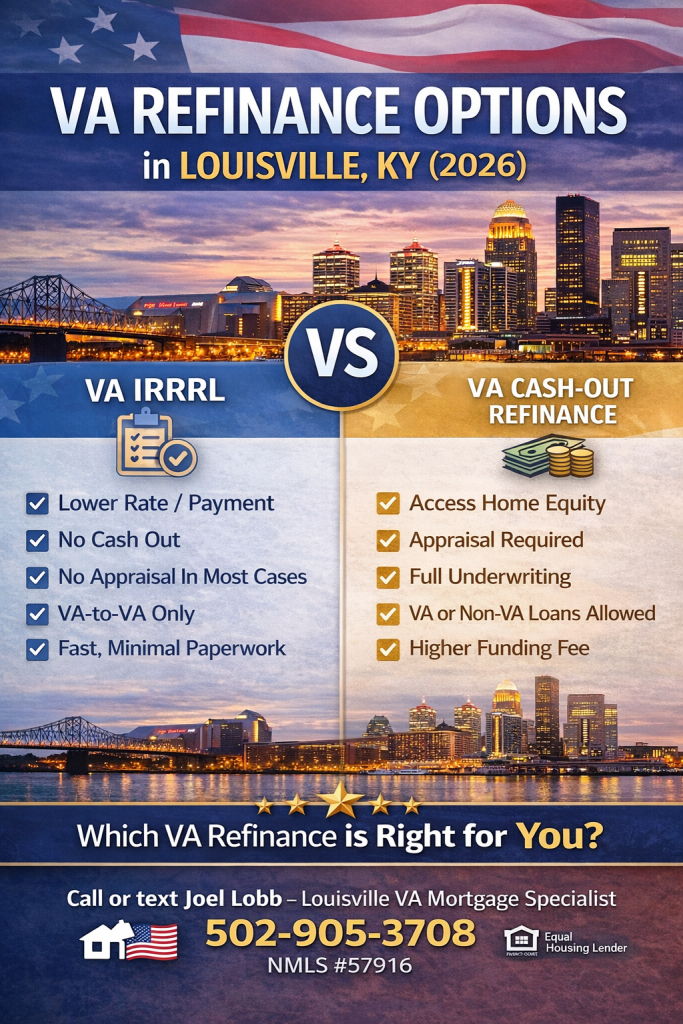
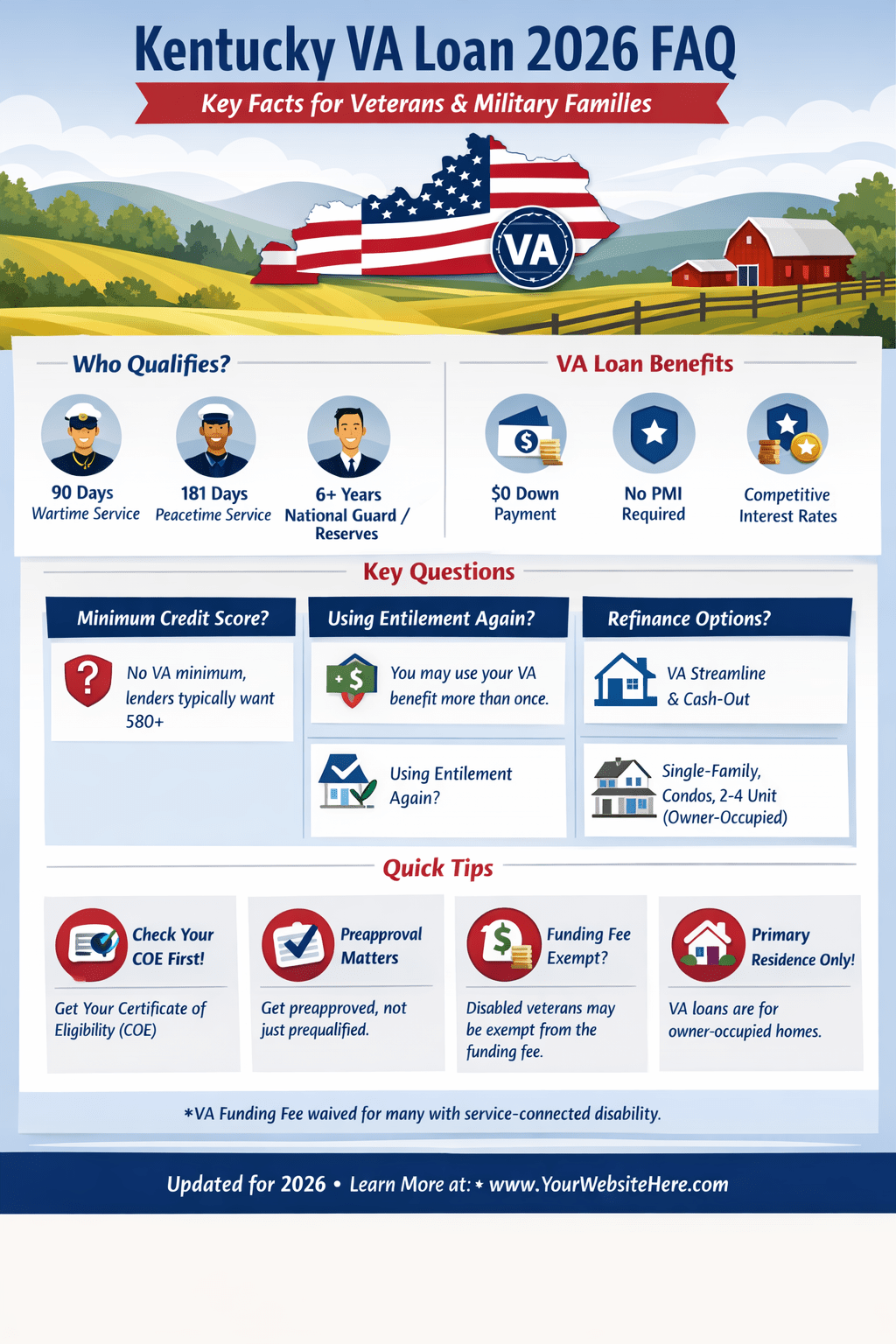
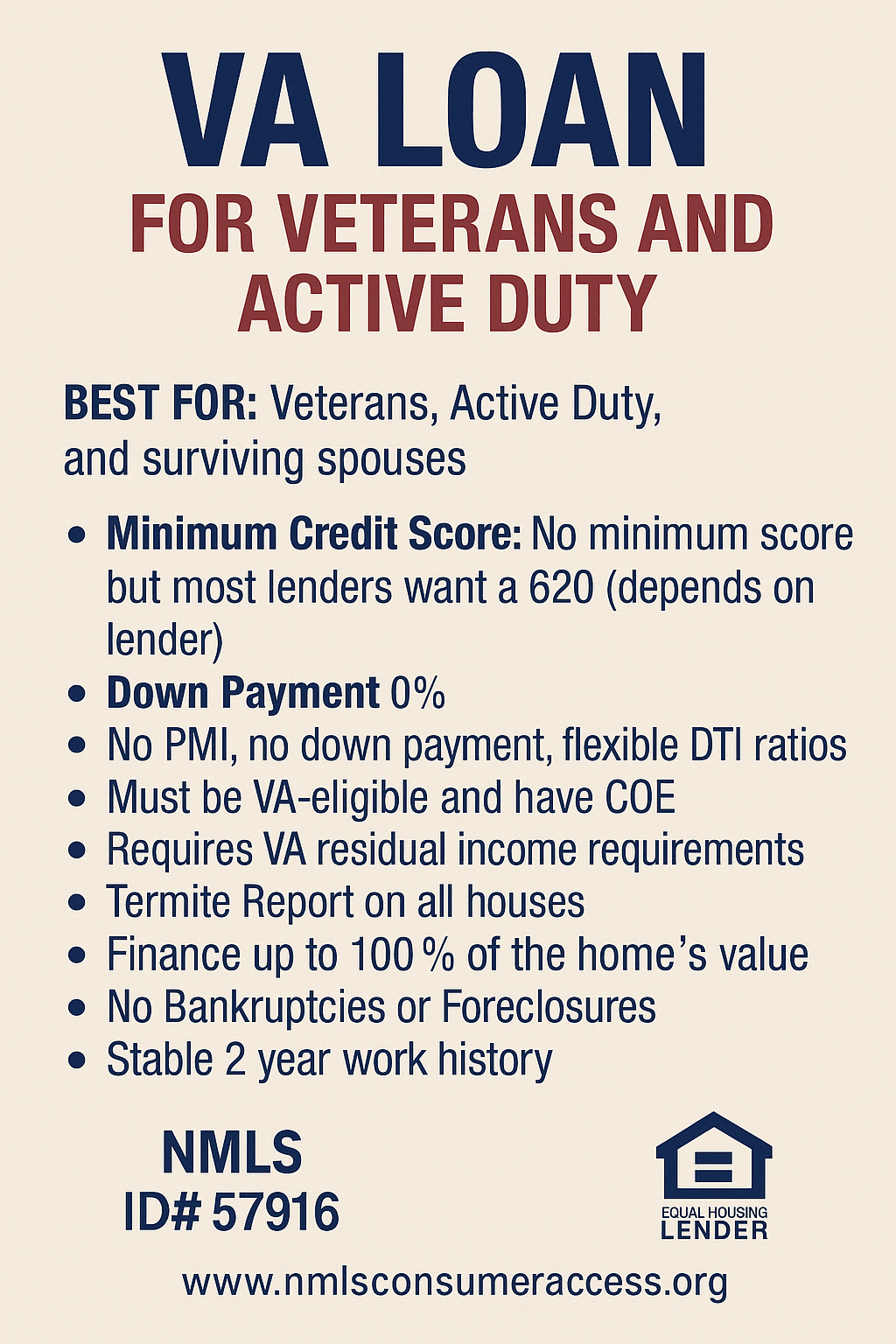


 Kentucky VA loans are typically the best solution for our honored veterans and service members. Contrary to popular belief, VA loans are fairly easy to process and tend to not be any more complicated than any other loan program that we offer.




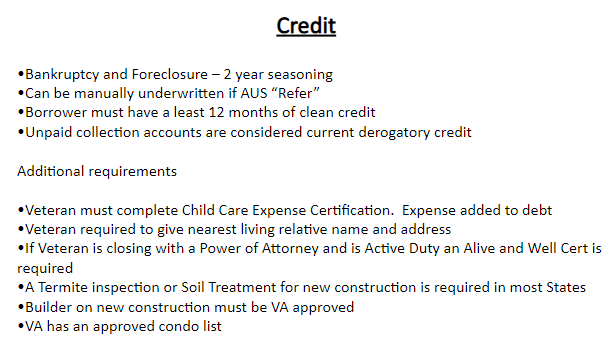



 KENTUCKY VA MORTGAGE LENDER

You must be logged in to post a comment.