I have successfully originated over 200 VA Home loans in Kentucky. Put my experience to work for you. Call or text me today at 502-905-3708 or email me at Kentuckyloan@gmail.com-This website is not affiliated with the VA or any other government agency. NMLS #57916 Equal Housing Lender. Same Day Approvals, Fast Closings, and a Local Veteran offering VA Home Loans in Kentucky. Free Credit Report and Pre-Approvals NMLS# 57916 Joel Lobb Loan Originator, Company NMLS ID 1738461 . Equal Housing Lender
Kentucky VA Mortgage does not have a minimum credit score requirement. When a lender requires a minimum credit score it is generally a 580-620, that is called a lender overlay. An overlay is a lender’s own underwriting guidelines above and beyond the VA guidelines.
The most common reason for a Veteran’s loan to be declined is not having a required minimum credit score per the lenders own set of guidelines above and beyond what the VA requires.
As announced by the VA in Circular 26-19-30 (which provides interim guidance on implementing “The Blue Water Navy Vietnam Veterans Act of 2019″) the conforming loan limit cap on guarantees was removed for Veterans with full entitlement. For Veterans who have previously used entitlement and the entitlement has not been restored, the maximum amount of guaranty entitlement available to the Veteran (for a loan above $144,000) is 25 percent of the conforming loan limit reduced by the amount of entitlement previously used (not restored) by the Veteran. The new guaranty requirements apply for loans closed on or after January 1, 2020.
In 1944, the Servicemen’s Readjustment Act was established in to provide veterans and their surviving spouses with a number of benefits. Among these benefits was the VA loan program. VA loans allow veterans and military to purchase homes with 100% financing, no mortgage insurance, and limited closing costs.
In order to apply for a VA loan, you need to meet eligibility requirements. Most veterans, military, and spouses of deceased military members will be eligible. Veterans can apply without any delay if minimum active duty service requirements have been met. Active duty service members on the other hand will need to complete a minimum of 6 months of service first. National Guard and reservists will need to wait 6 years before the benefit kicks in. If they are called to active duty at any point, they will become eligible after only 181 days.
Anyone who intends to apply for a VA loan will need to obtain their Certificate of Eligibility. It is important to note that the COE only proves to your lender that you have met the minimum service requirements. It is not a guarantee that you will be approved for a loan. One of the easiest ways to get your COE is through the VA’s eBenefits Portal. Whether you are looking to purchase your very first home or are looking to take advantage of the VA loan program to refinance, we can help you find a loan that meets your exact needs.
Why VA Loans? First and foremost, VA loans put homeownership within reach of a wider population. That’s because, while they’re issued and administered through a wide range of lending institutions, all VA mortgages are federally guaranteed. Lenders consider them lower risk than other loans. That means that people with average or even below-average credit scores are more likely to be approved for a VA loan than a traditional loan. If you have a high debt-to-income ratio or you’ve fallen behind on your credit card payments in the past, you may be eligible for a VA loan, even if you’ve been turned down for a private mortgage in the past. What’s more, vets and active-duty soldiers can often purchase a loan with no down payment. Military wages aren’t the most generous. In 2020, new service members earned as little as $19,000 per year, while the median salary in the US is nearly $50,000 per year. Particularly for people who are just starting out in their military careers, it can be tough to amass enough savings to match the down payment requirements associated with traditional loans. If you take out a private loan and put down less than 20% of your home purchase price, you’ll be required to pay for Private Mortgage Insurance (PMI) until you’ve established 20% equity in your home. That can add $100 or more to your monthly homeownership expenses. The government stipulates that VA loan borrowers don’t have to take out PMI. Finally, VA loan interest rates typically track below market averages. Again, that’s because lenders consider them less risky. What can that mean in savings for you? Here’s just one example. A 0.5% interest rate reduction on a $200,000 30-year mortgage can save you more than $19,000 in lifetime loan costs. And that’s before you factor in PMI payments. The more you borrow, the more you benefit from a low interest rate. The median purchase price of a US home in 2021 is over $400,000. So chances are, you could wind up saving more with a VA loan.
We recognize that our veterans provide an invaluable service. As such, we fully support home loan programs guaranteed by the U.S. Department of Veterans Affairs that are specifically designed to support veterans and their families. Although there are many perks that come with a VA versus conventional loan, a conventional loan offers some benefits that are not available through a VA loan. Let’s compare both of these loans to determine which type is best for you.
What Is a VA Loan?
A VA loan is a great benefit for those who have contributed to their country by serving in a military capacity. It is intended to give veterans access to home loans with advantageous terms. The federal government guarantees a portion of the loan, enabling veterans to qualify for more favorable terms when working with private lenders. The VA loan program was designed to offer long-term financing to eligible American veterans or their surviving spouses (provided they do not remarry). In addition to helping veterans buy, build, repair, retain or adapt a home for their own personal occupancy, it was also created to help veterans purchase properties with no down payment.
What Are the Pros and Cons of a VA Loan?
There are a myriad of reasons why a veteran would want to choose a VA Loan. A VA loan is federally backed. It also offers lower interest rates and fees than are usually associated with home lending costs. The only cost required by VA loans is a funding fee of one-half of one percent of the total loan amount. And that may be paid in cash or rolled into the loan amount. However, there are some factors you will want to take into consideration when deciding if a VA Loan fits your home buying needs.
No Private Mortgage Insurance (PMI) or Down Payment Necessary. Eliminating these costs can significantly reduce total housing expenses. Typically, a lender requires a 20% down payment. Borrowers who are unable to put down 20% are considered riskier and as a result must pay a PMI, which is typically 0.58% to 1.86% of the original loan amount per year on a conventional home loan. Because VA loans are federally backed, lenders do not have to worry about the house going into foreclosure and are able to offer a mortgage plan that does not require a PMI without a down payment.
Interest Rate Reduction Refinance Loan (IRRRL): IRRRL loans are typically used to reduce the borrower’s interest rate or to convert an adjustable rate mortgage (ARM) to a fixed rate mortgage. Veterans may seek an IRRRL only if they have already used their eligibility for a VA loan on the same property they intend to refinance. However, your lender can use the VA’s email confirmation procedure for interest rate reduction refinance in lieu of a certificate of eligibility. Additionally, an IRRRL can reduce the term of your loan from 30 years to 15 years. An IRRRL offers great potential refinancing benefits for vets, but be sure to check the facts to fully understand IRRRL stipulations and avoid an increase in other expenses.
Native American Direct Loan (NADL) Program: This program was designed to help Native American veterans or spouses of Native American veterans buy, build, or improve a home on federal trust land. This loan also qualifies veteran home buyers for the benefits listed above, in addition to limited closing costs and a low-interest, 30-year, fixed mortgage. Plus, this is a reusable benefit, which means you can get more than one NADL to buy, build or improve another residence in the future.
Adapted Housing Grants. To qualify for an adapted housing grant, veterans must own or will own the home they are looking to buy, and have a qualifying service-connected disability. This loan is a great option for veterans who are seeking to make home modifications to accommodate a disability. Currently, if you qualify for a grant, you can get up to a maximum of $100,896.
Funding Fee and Closing Fees. A VA loan funding fee may vary depending on whether you put a down payment on a house. Depending on if you are a first-time VA loan borrower or making a subsequent loan purchase, a funding fee can range from roughly 1.5% on a down payment of 10% or more to 3.5% on downpayment of 5% or less. Closing fees on a house can range from 2–5%. These are definitely costs you will want to consider when determining how much home you can afford.
Property Eligibility. A VA loan may not be applied to purchasing a farm, property in a foreign country, land or an investment property/second home.
What Is a Conventional Loan and How Does It Compare to a VA Loan?
Conventional mortgage loans are some of the most commonly used housing loans. However, they are not guaranteed by the federal government, so borrowers who are not putting 20% on a down payment will likely incur the costs of a PMI. Unlike government-backed loans, conventional loans are not limited by geographic constraints. They can offer more flexibility than a government-insured loan but may be harder to qualify for and require a higher credit score (at least 620).
For veterans, the main advantage of this loan compared to a VA loan is that it provides options that may fit a wider range of home-buying needs. Here are some benefits of conventional loans:
Usable for purchases, rate and term refinances and cash-out refinances
Allow cash out up to 80% of your home’s value
Debt to income ratios allowable up to 50%
Usable for primary, secondary or investment properties
Applicable for condos, single family homes and up to 1–4 unit properties
First-time home buyer programs with as little as 3% down payments
Options both with and without escrows or impounds
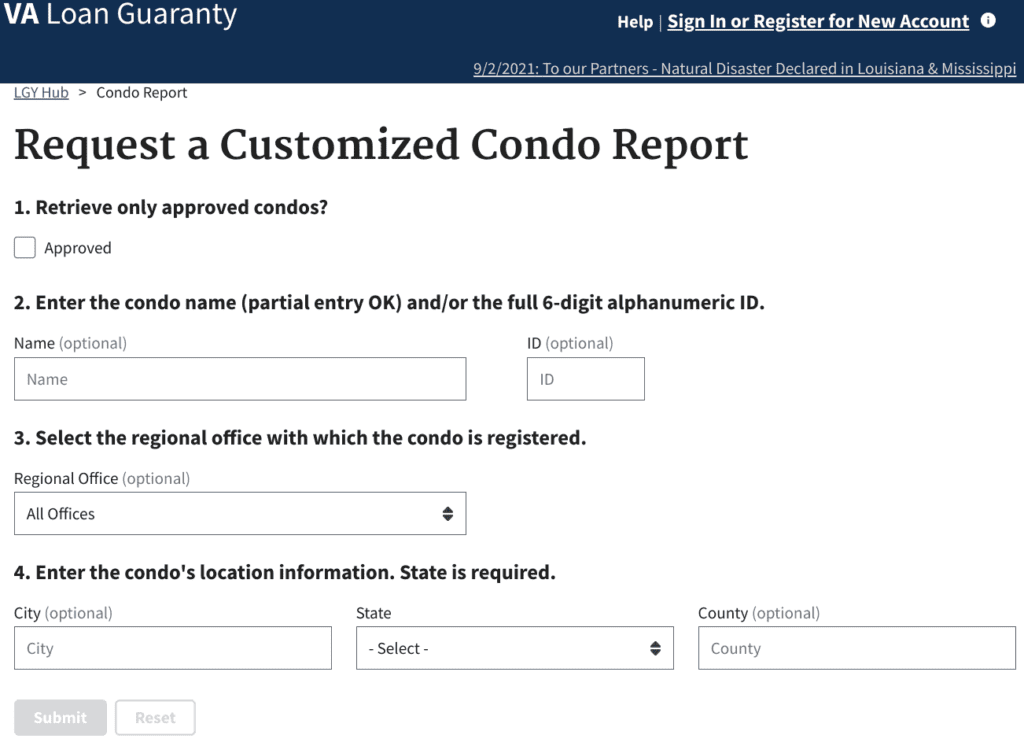
Request a Customized VA Approved Condo Report for Kentucky VA Mortgage Loans. See link below

 KENTUCKY VA MORTGAGE LENDER
You must be logged in to post a comment.